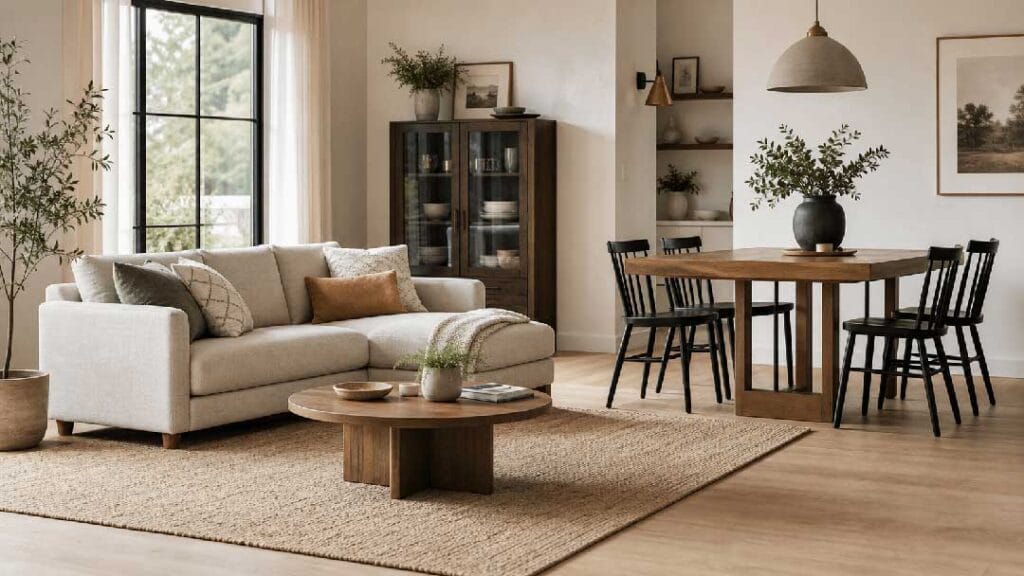
Fabric sofas have played a unique role in the furniture market over the past five years: they are neither genuine leather nor traditional fabric, but a synthetic fabric with a polyurethane coating. Early marketing described them as "more breathable than genuine leather and easier to care for than fabric," and with a price point between fabric and genuine leather, they quickly became the first choice for many families. However, starting around the third year, some users began posting photos on social media of their fabric sofas peeling, yellowing, and becoming sticky. Is this a problem with the product itself, or is it due to improper use and maintenance?
What exactly is the material of the tech fabric?
Technical fabrics, scientifically known as "leather-like coated fabrics," have a base of polyester or cotton-polyester blends, with a leather-like film formed by impregnation or coating with polyurethane (PU) resin. Early technical fabrics mostly used solvent-based PU, resulting in a thicker film that felt close to genuine leather. In recent years, water-based PU has become more popular, with a thinner and softer film, but its abrasion resistance sometimes decreases. Regardless of the type, the core structure is a fabric base plus a coating. This means its breathability benefits from the gaps between the fibers of the base fabric, but once the surface coating is damaged, moisture and oil can penetrate into the base fabric, making it impossible to clean thoroughly.
Compared to traditional PU imitation leather (commonly known as PU leather or microfiber), technical fabric has a thinner coating and a softer initial feel, but this also makes it more fragile in terms of hydrolysis resistance. In order to reduce costs during production, many factories use inferior plasticizers or incompletely cross-linked resins, which causes the coating to age faster under changes in humidity and temperature, eventually becoming brittle, powdery, and peeling off—what users call "peeling."
Three core reasons for peeling skin
1. Hydrolysis reaction: The nemesis of technical fabrics
In humid and hot environments, the polyurethane molecular chains in the coating hydrolyze with water molecules, causing chain segment breakage and loss of material elasticity. This process is significantly accelerated when the temperature exceeds 30°C and the humidity exceeds 70% %. Typical scenarios that induce hydrolysis include the humid, rainy season in southern China and heated rooms in northern China (where indoor humidity is low but temperature is high in winter, and excessive humidification can exacerbate the problem). The lifespan of different brands of technical fabrics varies greatly in hydrolysis tests: technical fabrics from reputable manufacturers can pass over 150 hours of humid and hot aging tests (80°C, 95% % relative humidity), while cheaper products may show visible cracks in less than 50 hours.
2. Insufficient adhesion between the coating and the base fabric.
Whether the coating adheres firmly to the fabric surface depends on the primer treatment process. Some factories, in order to reduce weight per square meter, reduce the amount of primer used, or directly coat the polyester base fabric without plasma treatment. This results in a coating that resembles a plastic film stuck on the surface, primarily relying on electrostatic adsorption with almost no chemical bonding. Daily sitting pressure and friction cause the coating to peel off from the edges, eventually lifting off in large sections. This is particularly noticeable in frequently touched areas such as seats and armrests.
3. Physical damage during daily use
Many users are accustomed to using cleaners containing organic solvents (such as alcohol or leather conditioner) or vigorously wiping their fabric sofas with a damp cloth. Alcohol can dissolve the additives on the surface of the PU coating, accelerating aging; water from a damp cloth carries dust into the micro-cracks of the coating, further exacerbating hydrolysis. In addition, pet scratches and friction from metal key parts can directly scratch the coating, exposing the base fabric and causing localized damage to spread.
Is peeling skin a common phenomenon after three years?
Based on complaints on social media and feedback from some home furnishing forums, the phenomenon of "peeling appearing after about three years" is real and not an isolated case. However, this does not mean that all engineered fabric sofas will experience this. Peeling is concentrated in several categories:
- Three-seater fabric sofa priced under 3000 yuan (promotional or online special offer).
- Sofas with seat cushion sponge density below 35kg/m³ (insufficient sponge resilience increases coating friction).
- A lightweight version using a water-based PU coating with a film thickness of less than 0.3mm;
- Locations near balconies or windows that receive direct sunlight.
Conversely, some leading brands that emphasize a "ten-year warranty" use a blending process (mixing PU and TPU) in their technical fabrics or add a transparent protective layer to the surface, which can indeed significantly extend the lifespan. However, the price of these products is correspondingly increased to over 6,000 yuan, approaching that of mid-range genuine leather sofas.
Changes in the consumer market: From enthusiasm to differentiation
2020-2022 saw the fastest growth in the market for engineered wood fabrics, with many furniture dealers saying "six out of ten sofas are made of engineered wood fabric." However, in the past year, the market has clearly diverged: some consumers have switched back to high-density cotton-linen or suede fabrics, while others have upgraded to microfiber leather or aniline leather. The reason is that issues such as peeling and stickiness have been widely reported.
Meanwhile, factories are also making adjustments. Looking at the 2023 Guangzhou Furniture Fair and the 2024 Shenzhen Furniture Fair, the number of exhibitors using high-tech fabrics decreased, replaced by new names like "tech fleece" and "microfiber fabric"—essentially similar products that are softer and thinner but with upgraded coating processes. Furthermore, many factories have begun offering warranties of five years or more, indicating greater confidence in their product quality.
In terms of price, there are still many tech-fabric sofas priced at 999 yuan and 1999 yuan on online platforms, but the proportion of follow-up reviews mentioning "peeling after two years" has increased significantly. In physical stores, however, sales staff often proactively explain the coating composition and maintenance precautions, which reduces after-sales disputes. This asymmetry in perception between online and offline channels has caused some otherwise neutral products to be overwhelmed by negative reviews online.
Is skincare really effective?
Proper maintenance can delay but not reverse the effects.
Once a technical fabric leaves the factory, hydrolysis and aging become an irreversible chemical process. Maintenance can only reduce external factors, such as isolating it from moisture, avoiding direct sunlight, and reducing friction. Specific methods include:
- Use a special technical cloth cleaner (neutral pH, solvent-free), spray it on, wipe gently with a slightly damp sponge, and then immediately blot dry with a dry cloth;
- Perform surface care once a month, using a silicone-based care spray (which forms a hydrophobic film).
- Maintain indoor humidity between 50% and 65%; avoid direct airflow from the humidifier onto the sofa.
- Rotate the seat cushion periodically (if it is removable) to distribute wear evenly;
- Do not use a hairdryer on a hot setting or expose the product to direct sunlight to dry it.
However, to be honest, for lower-priced fabric sofas that have been used for more than two years, even with careful maintenance, peeling will only be delayed by a few months to a year. Many user reports of "no peeling after three years" are mostly from sofas with harder foam and lighter weight. The real bottleneck to lifespan lies in the coating itself.
What to do after the skin peels off?
For small, localized areas of peeling: You can use a matching acrylic repair paste, but it will leave noticeable marks. For large areas of peeling: Recoating is not recommended because the adhesion between the old and new coatings is weaker, and it may peel off even faster. Some technicians suggest removing the original surface layer and re-wrapping it in microfiber leather, but the labor cost often exceeds the sofa's residual value. A more realistic approach is to replace severely peeling tech fabric sofas; tablecloths or blankets are only temporary solutions.
Industry improvement directions: From materials to standards
Some factories with R&D capabilities have begun to address the coating hydrolysis problem at its root:
- Using solvent-free PU or water-based TPU results in a more stable molecular structure and a hydrolytic lifespan that is 2-3 times longer.
- Adding an anti-hydrolysis agent (carbodiimide) to the formulation, such as 0.5%-1%, can significantly improve the wet heat aging performance.
- By using a knitted base fabric instead of a woven base fabric, the coating penetrates more easily and has stronger adhesion.
- They launched a removable and washable fabric sofa cover, allowing users to change the cover (similar to a fabric sofa), reducing maintenance costs.
However, from an industry-wide perspective, there are currently no mandatory national standards for engineered wood fabrics. The existing GB/T 3920-2008 abrasion resistance test and GB/T 19941-2005 hydrolysis resistance test are not specifically designed for sofa fabrics. Some associations and enterprise alliances are promoting the T/CNFIA 001-2023 group standard, "Polyurethane Synthetic Leather for Home Sofas," but its implementation is voluntary, and market penetration is low. This means that low-priced products still have a market, and consumers can only rely on brand reputation for selection.
Purchase Recommendation: Should You Buy a Fabric Sofa?
If you're considering buying a fabric sofa, ask yourself these three questions first:
- Does your budget allow at least 5,000 yuan? If you can only afford less than 3,000 yuan, it is recommended not to choose technical fabrics, but to choose high-density cotton linen or blended fabrics, which have more controllable durability.
- Are you in a humid southern region or indoors where you can't avoid direct sunlight? If so, I strongly advise against using technical fabrics. You can choose microfiber synthetic leather (commonly known as microfiber), which, although slightly less breathable, usually has better hydrolysis resistance.
- Is it acceptable to replace the sofa in about three years? If it's just for temporary housing or rental, the low price of the tech fabric is acceptable, but you need to manage your expectations.
Additionally, carefully check the label when buying: confirm the coating type (for water-based PU, ask if it contains anti-hydrolysis agents), the base fabric material (polyester has better adhesion than nylon), and the sponge density (at least 35 kg/m³). Never believe sales pitches that promise "lifetime protection against peeling."
Future Trends: Will Technological Fabrics Disappear?
Judging from current consumption trends, technical fabrics will not disappear completely, but their market share is being eroded by two types of products: one is a new generation of composite fabrics such as "cat scratch fabric" and "tech fleece," which also have waterproof and stain-resistant properties, but their physical properties are closer to those of fabrics, and they will not produce the kind of flakes that peel off even when worn; the other is low-cost microfiber leather, which, through non-woven fabric base and microporous technology, has a feel and breathability close to that of genuine leather, and its price has also dropped to the range of technical fabrics.
The true value of technical fabric lies in its middle ground: it's "more expensive than leather but less durable than fabric." However, this middle ground requires balance. For manufacturers, improving the adhesion between the coating and the base fabric, and extending its hydrolysis resistance, are fundamental to retaining consumers. Otherwise, even the best marketing cannot overcome the devastating impact of the phrase "peeling after three years."
For those currently choosing a sofa, nkfurn's view is that furniture material selection should ultimately come down to the context and budget. nkfurn has long focused on the materials, craftsmanship, and market changes of various furniture products. Our website content continuously analyzes the real-world performance of materials such as technical fabrics, microfiber leather, and genuine leather, including cost structure, maintenance difficulty, and lifespan comparisons. We hope that through objective product analysis, we can help users understand the logic behind furniture materials and reduce consumer losses caused by information asymmetry.
Further Reading
If you are systematically planning your furniture selection or market content, you can also continue reading these related articles:
- Explore the World of Nankang Furniture——Where Craftsmanship Meets Culture
- New living room decorating trends for 2025: The integration of de-emphasis on the living room and multifunctional furniture.
- Ebony Wood - Exploring the Charm of Solid Wood and Redwood Furniture: Introduction to Common Precious Wood Species