Introduction to Ebony
The formation of ebony
Ebony, also known as petrified wood, carbonized wood, or fossilized wood, is called "ebony" by the people of Sichuan and "Oriental sacred wood" by Westerners. It is a precious tree from the dense primeval forests of ancient times, possessing "life" within it. It gave life to the earth and was buried deep beneath riverbeds for thousands, even tens of thousands of years due to crustal changes. Through the scouring of rushing waters, the crushing of mud and rocks, and the nibbling of fish and crabs, it has acquired various shapes and forms. Over millions of years, it has gradually carbonized under specific environments of water, minerals, and high pressure. Due to the natural preservative properties of eucalyptus oil, fragrance, and antibacterial components in some species, it has become ebony. Through millennia of natural erosion, petrified wood combines the elegance of wood with the spirit of stone. Its texture is solid and heavy, its color is a rich, dark black, its surface is smooth and delicate, and it is oily, moisture-resistant, fragrant, and resistant to decay and insects for thousands of years, a truly natural wonder. Now, it has been brought back to the light of day due to quarrying, sand washing, and construction excavation. Recently discovered species include red cedar, nanmu, camphor, oak, and willow. These native woods vary, resulting in colors such as red, brown, yellow, and black. Ebony is mainly produced in the Sichuan Basin of China, especially the Chengdu Plain. It possesses the characteristics of being "lean, translucent, porous, and wrinkled," truly deserving its reputation as the "Oriental Sacred Wood."
The Uses of Ebony
Due to its scarcity, low yield, and non-renewable nature, ebony has been regarded as a precious wood and a rare commodity since ancient times, symbolizing nobility and status. There are folk sayings in my country such as "A chest full of jewels is not as valuable as a piece of ebony" and "Ten thousand taels of gold sent to the underworld can be exchanged for ebony to worship the spirits of heaven." In ancient times, high-ranking officials, nobles, and literati regarded ebony furniture and artworks carved from it as family heirlooms, treasures to protect the home, and objects to ward off evil. Throughout history, especially during the Ming and Qing dynasties, ebony was the preferred material for the construction of palaces by emperors. The Qing emperors even designated it as a material exclusively for the imperial family, prohibiting its use by commoners, further increasing its scarcity. Furniture and artworks made from the unique material, ancient charm, and diverse artistic forms of ebony are works of art that highly integrate nature and humanity, possessing significant aesthetic and collectible value.
The medicinal value of ebony
Volume 35 of Li Shizhen's *Compendium of Materia Medica* from the Ming Dynasty records that ebony is sweet, salty, and neutral in nature, and has detoxifying properties. It is also used to treat cholera-like vomiting and dysentery; the powder is taken with warm wine. It is precisely because of this spiritual quality that teachers at the Palace Museum have determined that ebony also has significant functions in promoting blood circulation and prolonging life. Among the ebony pieces we have collected, a unique and subtle fragrance often emanates after nightfall, especially in the finished product exhibition hall, where the faint fragrance lingers for a long time after entering the room, deeply penetrating the senses.
The Feng Shui Effects of Ebony
Ebony absorbs the spiritual energy of heaven and earth, possessing extraordinary power. Tested by Japanese quantum science instruments, its energy far surpasses that of crystal, granting it special abilities to calm the soul, ward off evil, protect the body, safeguard the Dharma, and attract wealth. The people of Sichuan regard it as a treasure for warding off evil and bringing good fortune. Because ebony is a mysterious and precious treasure, a sacred object, there is a saying among the people: "Even a chest full of jewels is not as valuable as a piece of ebony."
Differences and types of striped ebony and ebony
Striped ebony and ebony both belong to the rosewood family, but they are different categories: striped ebony and ebony. They have both similarities and differences.
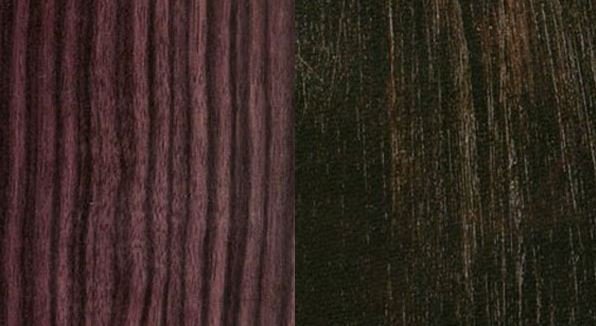
Striped ebony, also known as patterned ebony, is, as the name suggests, ebony with stripes. The national standard for rosewood separates striped ebony from ebony, making it an independent category. Striped ebony and ebony both belong to the genus *Diospyros* within the family Ebenaceae. The difference lies in their wood color: the heartwood of ebony is jet black, while the heartwood of striped ebony is black or chestnut brown with light-colored stripes.
Striped ebony was historically known as "wood," "patterned wood," or "ebony wood." The Jin Dynasty scholar Cui Bao wrote in his *Notes on Ancient and Modern Times*: "This wood comes from Linyi in Jiaozhou. It is black in color with patterns, and is also called 'patterned wood.'" The Jin Dynasty scholar Ji He wrote in his *Records of Southern Plants and Trees*: "The 'patterned wood' tree is seven or eight feet tall, its color is pure black, like a water buffalo horn, used to make horsewhips. It is found in Rinan." Ancient records indicate that "ebony wood" was brought by ship, and its patterns were very distinct. In Japan, ebony and striped ebony are called "black ebony." According to Shoji Sudo's *Southern Woods*, striped ebony has a black heartwood with gray or reddish-brown stripes.
In my country, the term "ebony" generally refers to ebony, striped ebony, and other black rosewoods such as Dalbergia fusca and East African Dalbergia odorifera, and even some non-rosewood types. Consumers should be wary of non-standard names like "ebony" and "ebony with stripes" in the market. When purchasing rosewood furniture, be sure to ask the seller to specify the standard name from the national standard for rosewood. In particular, "ebony with stripes" and striped ebony are two different concepts. Rosewood experts emphasize that striped ebony has light-colored stripes on black wood, not black stripes on light-colored wood.
Types and characteristics of striped ebony
Sulawesi ebony is a large tree; it can reach a height of 40m; the branch height is 10-20m; the trunk diameter is 80-100cm; and the buttress roots can reach 4m. It is mainly distributed on the island of Sulawesi in Indonesia. It is a diffuse-porous wood. Growth rings are indistinct. The heartwood is black or chestnut brown with black and chestnut brown streaks. The pores are visible to the naked eye; it contains resin; the wood has a luster; it has no aroma or special taste; the texture is fine; the grain is usually straight to slightly interlocked; the wood has high shrinkage; the wood is very heavy, with an air-dry density of 1.09g/cm³; the wood is very resistant to decay; it is difficult to dry and prone to cracking. Fresh wood has an unpleasant, pungent smell when sawn.
Philippine ebony, a small tree, is mainly distributed in the Philippines. It is a diffuse-porous wood with indistinct growth rings. The heartwood is black, jet black, or chestnut brown with black and chestnut brown streaks. The pores are visible under a magnifying glass and contain black or dark brown resin. The wood has a luster; it has no aroma or special taste; the texture is very fine; the grain is usually straight to slightly interlocked; the wood has high shrinkage; it is heavy to very heavy, with an air-dry density of 0.78–1.09 g/cm³.