
Characteristics and identification knowledge of chicken wing wood
Chicken wing wood belongs to the genera *Millettia* and *Imperata*. It has a wide distribution, found in regions such as Congo and Zaire in Africa, South Asia, Southeast Asia, and Guangdong, Guangxi, Yunnan, and Fujian provinces in China. It can be broadly classified into three types: African *Millettia*, white-flowered *Millettia*, and *Imperata*.
Chicken wing wood, also known as "Qizi wood," gets its name from its grain pattern, which resembles a chicken's wing. Qu Dajun's *Guangdong Xinyu* refers to it as "Hainan Wenmu." It describes some as having white wood with black markings, while others are yellowish-purple, with a fine, cloud-like pattern when sawn obliquely. The seeds are red beans, also called "love beans," and can be used to make jewelry. Therefore, it is also known as "love bean wood" and "red bean wood." The Tang Dynasty poem, "Red beans grow in the south, how many branches sprout in spring? I wish you would gather more, for this is the most evocative of longing," describes this tree. *Gegu Yaolun* states: "Chicken wing wood comes from the Western Regions. Half of the wood is pure black, like ebony. Those with spurs are more valuable. The Western Regions use it to make nose rings for camels, avoiding the grease and grime of other woods. It is often used to make knife handles, but large pieces are rarely seen." However, based on surviving artifacts, this is not necessarily the case. There's a distinction between "new" and "old" chicken wing wood. According to experienced furniture craftsmen in Beijing, the new wood is coarse, with a purplish-black hue, unclear and dull grain, and the wood fibers are prone to warping and cracking. The old wood, on the other hand, has a fine texture, with alternating shades of purplish-brown "crab claw" patterns that closely resemble chicken wings. Especially on the longitudinal section, the wood grain is delicate and flowing, endlessly varied, naturally forming various landscape, figure, and scenery patterns. Compared to the color and texture of rosewood and sandalwood, chicken wing wood has its own unique characteristics.
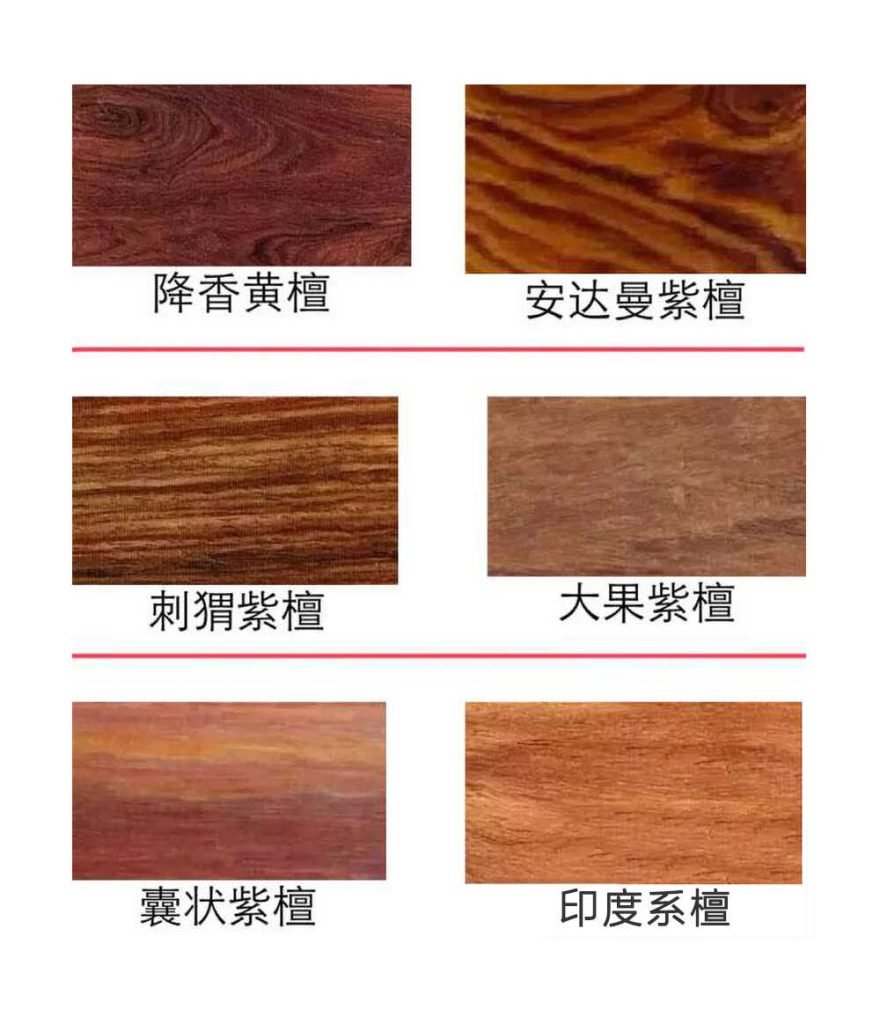
New and old varieties of *Millettia dielsiana* (chicken wing wood) belong to the genus *Ormosia*. According to Chen Rong's *Taxonomy of Chinese Trees*, the genus *Ormosia* comprises approximately 40 species. Hou Kuanzhao's *Flora of Guangzhou* states that there are over 60 species, with 26 native to China. These vary in color (some dark, some light, some with beautiful grain, some with less beautiful grain) and are simply different varieties.

What are the characteristics of chicken wing wood?
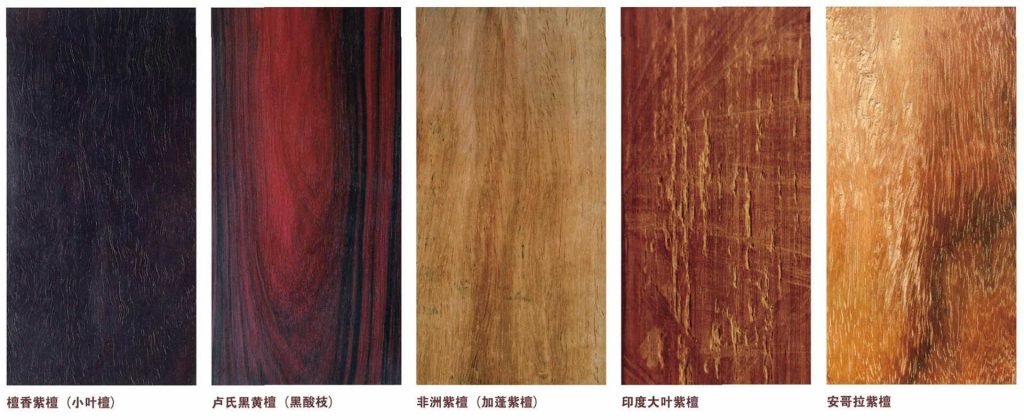
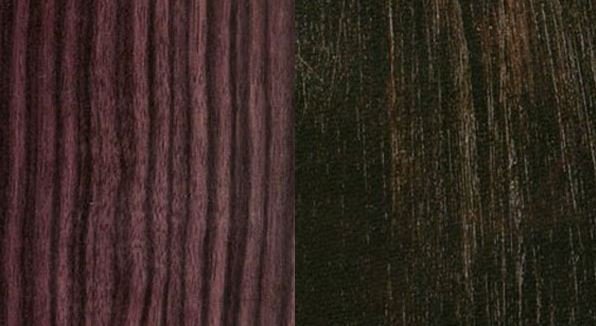
Chicken wing wood is categorized into old and new varieties. Old chicken wing wood has a dense, compact texture with alternating shades of purplish-brown forming patterns. Especially when longitudinally cut at a slight angle, the fine, flowing lines give it a shimmering, feather-like appearance. New chicken wing wood is coarse, with a mix of purplish-black and dark brown, and its grain is often indistinct, stiff, and lacks any sense of movement. It is also prone to warping and cracking when nailed with water-worn patterns. In reality, true old chicken wing wood is long extinct; the chicken wing wood we see today is all new chicken wing wood from Fujian, Southeast Asia, South Asia, and Africa. The so-called Burmese chicken wing wood sold in the rosewood furniture market originates from Myanmar and Thailand. Its heartwood is dark brown or chestnut brown, often with black stripes, has a high density, sinks in water, and has a smooth, fine texture. The heartwood contains a sandy, pebble-like substance. Burmese chicken wing wood takes 150-200 years to mature and can reach a diameter of 30-40cm. It is often referred to as old chicken wing wood by merchants in the market.
African wenge wood originates from the Congo Basin in Africa. Its heartwood is dark brown with a slight yellow tinge, often featuring black stripes, and has the coarsest grain. It also has the lowest density, does not sink in dry water, and is relatively brittle with slightly lower hardness. African wenge wood is free of sand and gravel. The trees are relatively large and straight. In the market, it is also called "black wenge wood" or falsely referred to as "Southeast Asian wenge wood." It is one of the more abundant new wenge wood species on the market. (Redwood Knowledge)
In the national standard for "Rosewood," there is another type of chicken-wing wood called "Ironwood," which is mainly distributed in tropical countries such as India, Sri Lanka, Myanmar, Thailand, and Vietnam. Small quantities are also found in Yunnan and Guangdong provinces of my country. The heartwood of Ironwood is chestnut brown or dark brown, often with black stripes; its quality is between that of Burmese chicken-wing wood and African chicken-wing wood. Additionally, we should be aware of another non-rosewood species, Ironwood, also known as "Iron Pear Wood" or "Iron Chestnut Wood," which originates in Southeast Asia and is also distributed in Yunnan and Guangxi provinces of my country. When freshly cut, the heartwood is reddish-brown, turning dark reddish-brown with purple stripes after a short time. It has a high density, sinks in water, and is very hard. Ironwood can be found in large, whole pieces, and because its color and grain are quite similar to chicken-wing wood, it is often used to imitate it. However, careful observation can distinguish them: chicken-wing wood has a finer grain with circular patterns, while ironwood has a coarser grain with straight lines. Although ironwood is not a rosewood species, it is a superior material for hardwood carving.
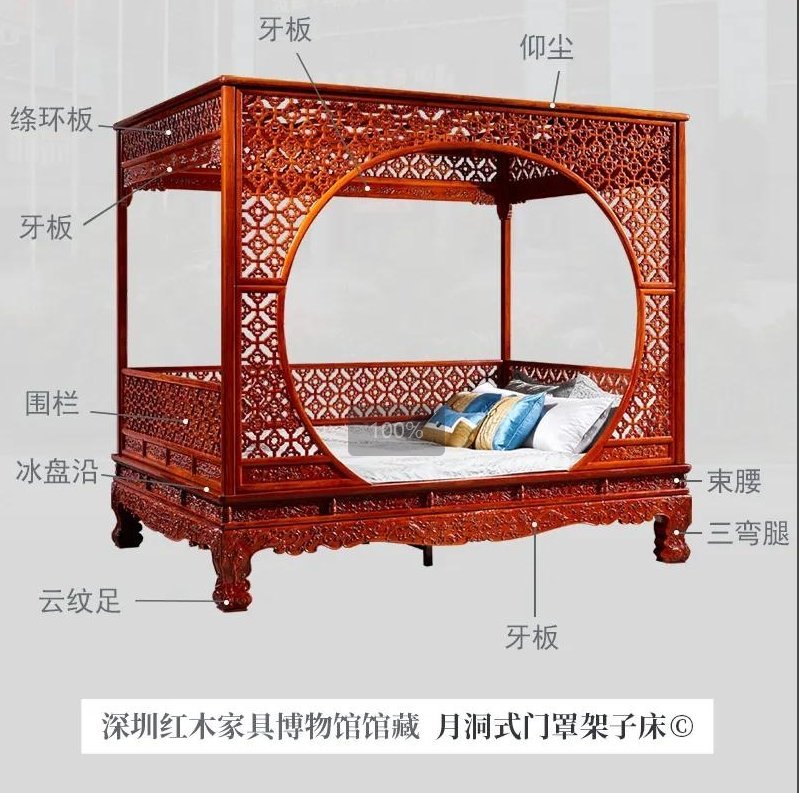
Chicken wing wood furniture gets its name from its internal grain pattern, which resembles a chicken wing. Common types of chicken wing wood include African chicken wing wood and Burmese chicken wing wood. A small amount of chicken wing wood, known as ironwood, is also found in northern China. Although chicken wing wood is relatively precious, it does have certain drawbacks. Let's take a look.
1. Advantages of chicken wing wood furniture:
Chicken wing wood furniture boasts a distinctive and beautiful grain, is of excellent quality, and is absolutely resistant to insects. Furniture made from chicken wing wood looks sophisticated and is highly favored by refined individuals. Moreover, chicken wing wood furniture possesses an artistic quality, and placing it among your furniture collection will undoubtedly showcase your taste.
2. Disadvantages of chicken wing wood furniture:
Chicken wing wood furniture is relatively expensive, and new chicken wing wood furniture is often made of rough wood with the wood fibers prone to warping and cracking. Furthermore, carving chicken wing wood furniture is somewhat difficult, so complete sets of chicken wing wood furniture are rare on the market.
3. Methods for identifying chicken wing wood furniture:
There are many counterfeit and inferior chicken wing wood products on the market now, so you need to learn how to distinguish them. Genuine chicken wing wood is divided into old chicken wing wood and new chicken wing wood. Furniture from the Ming and Qing dynasties was made of old chicken wing wood, which has a grayish color and less obvious grain, and is only suitable for general carving. New chicken wing wood is generally used in furniture from the late Qing dynasty. It has coarse fibers, good toughness, is not suitable for carving, has a slightly yellow color, and distinct grain. When purchasing, you should pay attention to the physical properties of chicken wing wood furniture.
In the market, chicken wing wood is often named according to its color. White-flowered Millettia from Myanmar and African Millettia from Africa are typically darker in color, ranging from purplish-brown, dark chestnut brown, or blackish-brown. These two types of chicken wing wood are called "black chicken wing wood" in the market. There are also non-chicken wing woods such as Purple Double Dragon Petal Wood, Yellow Apple Wood, and Fire Membrane Petal Wood used to imitate chicken wing wood, called "black chicken wing," "yellow chicken wing," and "white chicken wing," respectively. The main purpose of merchants creating "black chicken wing," "yellow chicken wing," and "white chicken wing" is obvious.
As seen above, naming chicken wing wood products based on age, origin, or color is inaccurate and fails to accurately represent the tree species, resulting in market confusion. Some merchants deliberately play word games, while unscrupulous individuals sell inferior or counterfeit products, leaving consumers, lacking relevant knowledge, easily deceived.
To regulate the market, merchants and consumers should strictly adhere to the species names of chicken-wing wood as specified in the national standard GB/T18107—2000 "Rosewood" when conducting trade, to avoid unnecessary disputes. According to GB/T18107—2000 "Rosewood," chicken-wing wood is limited to *Millettia laurentii* (white-flowered millet), *Millettia africana* (African millet), and *Cassia fistula* (ironwood), belonging to the genus *Millettia* of the family Fabaceae, and the genus *Cassia* of the family Caesalpinioideae. *Cassia fistula*, however, typically has a lighter, yellowish-brown color and is known in the market as "yellow chicken-wing wood."
Classifying wenge wood based solely on color is also problematic. In fact, due to varying growing conditions, African wenge wood isn't always dark; some varieties are lighter in color. If classified by color, lighter-colored African wenge might be categorized as "yellow wenge" in the market. Furthermore, many furniture factories have recently treated wenge wood with color, altering its natural hue. Therefore, classifying it based on the wood's apparent color is inaccurate.