
ACID BRANCH WOOD Introduction
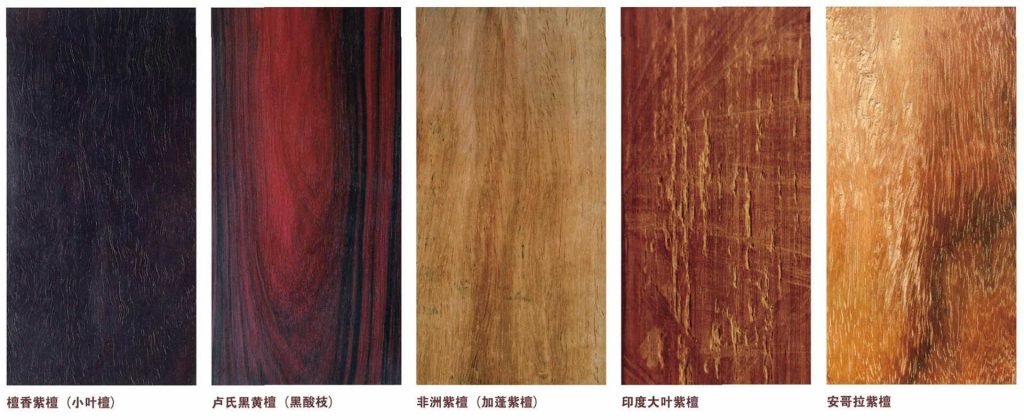
The scope of rosewood is determined to be 5 genera and 8 categories. The 5 genera are red sandalwood, yellow sandalwood, persimmon, bean and ironwood. The 8 categories are named after the trade names of wood, namely red sandalwood, rosewood, fragrant wood, black rosewood, red rosewood, ebony, striped ebony and wenge. Rosewood refers to the central part of these 5 genera and 8 categories of wood. Furniture made of other wood cannot be called rosewood furniture.
Rosewood is commonly known as old rosewood. The wood is hard and heavy, durable, and can sink in water. The structure is fine and has lemon red, dark purple, and purple-black stripes. When processed, it exudes a spicy fragrance with a sour taste, hence the name. Ebony is black and shiny, with a fine and dignified structure and a greasy feel.
Rosewood is the main raw material for rosewood furniture in the Qing Dynasty. Furniture made of rosewood, even after hundreds of years, as long as it is slightly polished and moisturized, it will still look brand new. It can be seen that the excellence of rosewood has long attracted the attention of the world. Rosewood is a tropical evergreen large tree, mainly produced in India, Vietnam, Thailand, Laos, Myanmar and other Southeast Asian countries. It was originally produced in Fujian, Guangdong, Yunnan and other places in China.
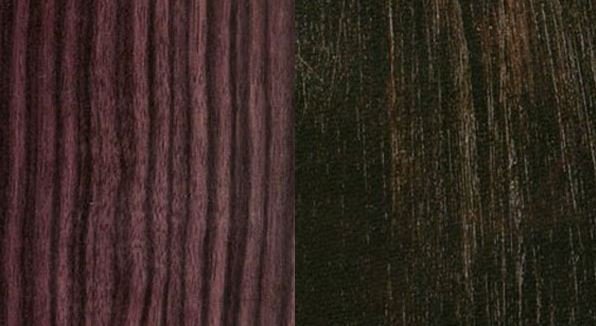
Rosewood has two colors: dark red and light red. Generally, the "greasy" ones are of high quality, with fine structure, hard and heavy, and can sink in water. What is particularly obvious is that there are often dark brown or black stripes in the dark red, and the texture is clear and varied. Rosewood furniture is polished and painted, smooth and lubricated, with a durable gloss, giving people a kind of pure and implicit beauty. Rosewood is called "red wood" in the north, and "old red wood" in Jiangsu and Zhejiang. Therefore, rosewood furniture is almost all called red wood furniture or old red wood furniture except in Guangdong. Many red wood furniture in the Qing Dynasty are rosewood furniture, that is, old red wood furniture. Especially in the middle of the Qing Dynasty, not only the quantity is large, but also the quality of wood is relatively good, and the manufacturing process is also exquisite. In the minds of modern people, it is the real mahogany furniture. Hainan Huanghuali, small-leaf red sandalwood and big red rosewood are also known as the three major tribute woods.
Old redwood-ACID BRANCH WOOD
Nowadays, people may not know as much about rosewood as they do about huanghuali and red sandalwood, but for a long time, rosewood furniture has always been very important in our lives. It is closer to the lives of ordinary people than rosewood and red sandalwood. In the past, it was also very precious and popular furniture in many wealthy families. Now, rosewood furniture may be rarely seen in life, but it can be seen in many museums or antique furniture auctions, and there are a lot of them in existence. New antique rosewood furniture also occupies a large share in the antique furniture market. Some well-known companies now also produce it, which is not uncommon. If you like it, you might as well buy one or two.
Although rosewood is not as precious as the huanghuali and red sandalwood we know, it also has a very unique position in the Chinese classical home environment and is a top-grade product. In the Ming and Qing Dynasties, especially after Qianlong, it was highly respected by the upper class. Nowadays, many film and television dramas that show the nobility of the Ming and Qing Dynasties mention that buying rosewood furniture is also reasonable and based on history.
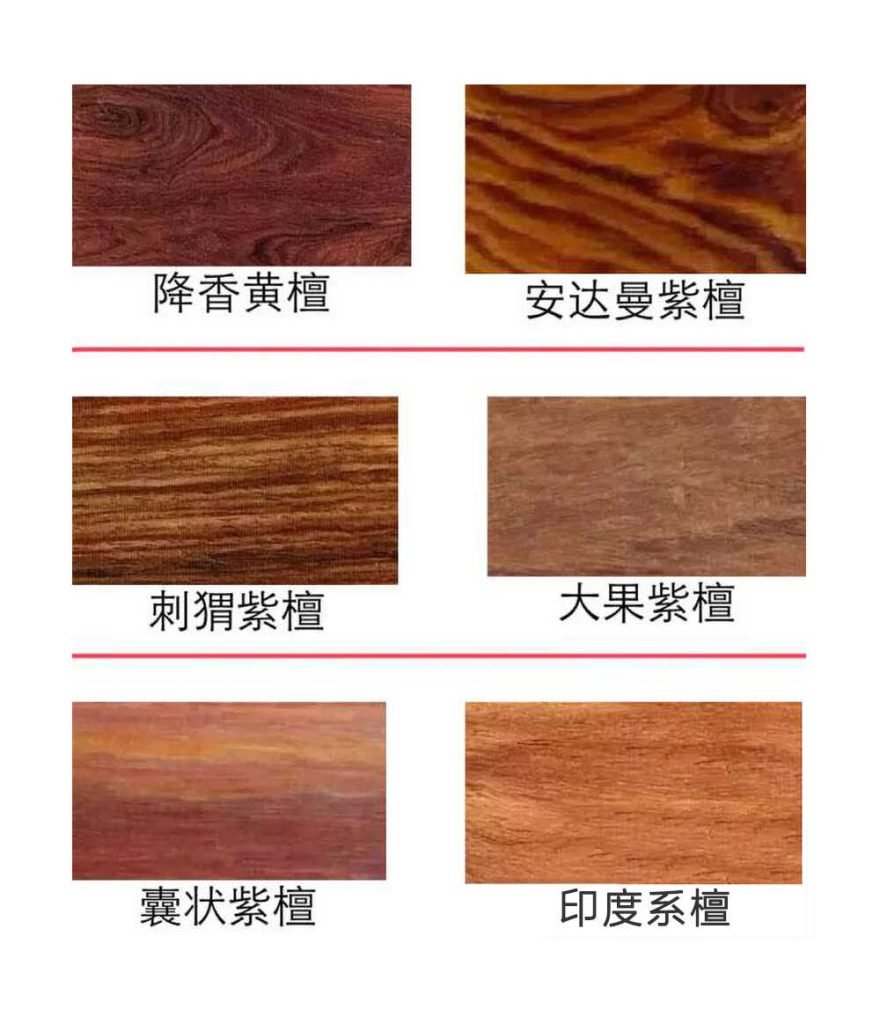
Speaking of rosewood, we must first start with the word "red wood". Now, in the use of furniture, "rosewood" seems to have become a very broad term, as if any red wood can be called rosewood. In fact, "rosewood" or "old rosewood" (in Jiangsu and Zhejiang) used to be the name of rosewood. Of course, many experts still call it that now. Rosewood is mainly produced in Southeast Asian countries. It has a dense structure, warm texture, fine texture, and can sink in water. It is named because it has a slightly sour aroma after being cut open. The distinction between rosewood in color and quality is relatively complicated. There are black rosewood, red rosewood, white branches and flower branches. Like other high-end furniture materials, the heartwood is used when it is used. Among them, black rosewood is the most precious and rare. Real black rosewood furniture is rare. Most of what we see is red rosewood furniture. The quality of white branches and flower branches is far different and is rarely mentioned. Old rosewood furniture with good quality and deep color is very similar to red sandalwood after oxidation and patina, and the value of old rosewood furniture with a history of more than 200 to 300 years is also close to red sandalwood. The new rosewood with lighter color looks more like huanghuali, and the difference in sense is just "like red sandalwood without gold thread, like huanghuali without ghost face".
In modern life, the significance of rosewood furniture is more extraordinary. In addition to huanghuali and red sandalwood, it helps more people realize their dream of owning high-end classical furniture. It is relatively cheap, but of superior quality, and has the advantages of other woods, which is rare. However, it is understood that the materials used in antique rosewood products on the market are not as simple as we think. In most people's impression, rosewood is mostly black and red, white branches are rarely heard of, and flower branches are even rarer. In fact, there is a lot of mystery in it. It goes without saying that black rosewood is the most valuable. The color difference between white rosewood and red rosewood is far less than that in the literal sense. White rosewood is only slightly lighter in color than red rosewood. After technical processing, it is difficult for ordinary people to distinguish them, but the value contained in them is very different. The cost of white rosewood is 30% to 50% lower than that of red rosewood. If merchants and manufacturers make tricks in it, they will have very attractive profit margins. According to a technician from a furniture company in Beijing, illegal manufacturers have more ways to deceive consumers on flower branches. In terms of value, the price of flower branches is much lower than that of white branches. However, after technical processing such as coloring, other varieties of rosewood can also be indistinguishable from the real thing. In this case, it is difficult to protect the rights and interests of ordinary people? In fact, it is not the case. Walking more and going to the production base in person is still the simplest and most effective way. Because here you can not only see the subsequent links of manual production, but also the whole process of cutting and unloading. After all, seeing is believing. Moreover, the value of new rosewood is much different from that of old rosewood. In addition, the density and specific gravity of old rosewood are higher than those of new rosewood, and the yield rate is lower, so its value is much higher.