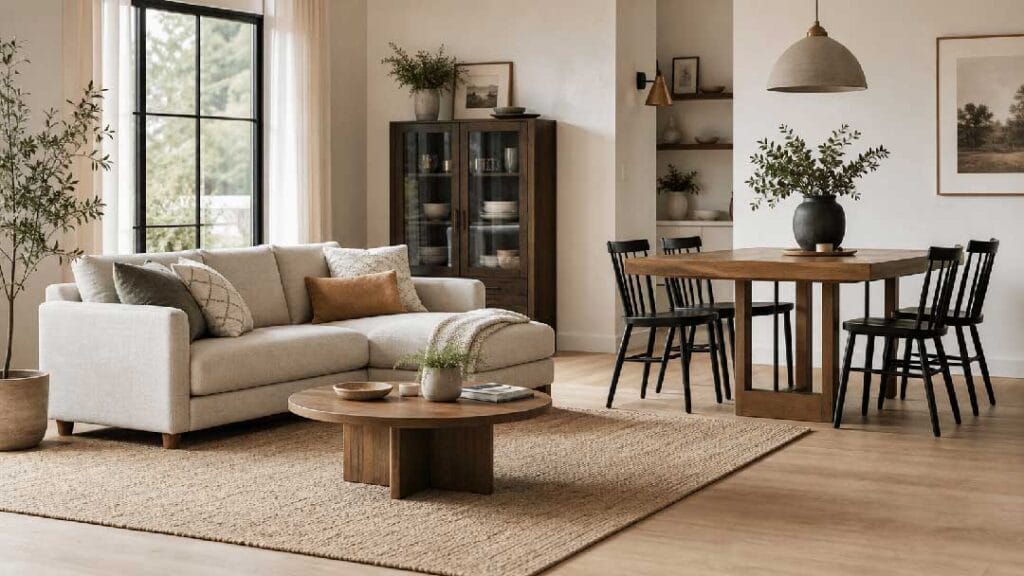
After two or three years of use, the first problem to appear on a sofa is often not the frame, but the fabric: pilling of the seat cushions, whitening of the armrests, and cracking of the seams. These issues are almost invisible in stores because most of the information customers have is concentrated on a parameter card—weight and abrasion resistance. The numbers themselves are not wrong; the problem is that they are often used as conclusions.
To put weight and abrasion resistance in their proper places, we first need to understand what each of these figures measures, under what conditions it is measured, and what it doesn't explain. Below, we'll discuss parameters, fabric categories, scene matching, price ranges, and store operations, trying to clarify the parts of the sales process that are difficult to elaborate on.
Weight: Ask for the unit first, then look at the numerical value.
The most ambiguous aspect of weight measurement is the unit. There are at least two ways to write it in the industry: grams per square meter (g/m²) and grams per meter (g/m²). The latter is tied to fabric width; the weight per meter will differ significantly depending on whether the fabric is 1.4 meters or 1.5 meters wide, while the weight per square meter remains the same. Therefore, when you hear "this fabric weighs over 300 grams," first confirm whether it's in square meters or meters; otherwise, comparisons are meaningless.
Even with standardized units, weight is not an isolated indicator. Two pieces of fabric weighing the same 320 grams, one coarse-count plain weave and the other fine-count high-density fabric with a light nap, will have completely different feel and durability. Weight truly indicates coverage, thickness, and resistance to deformation: higher weight fabrics are less likely to show through the lining and sponge, have firmer edges after being covered, and are less likely to sag after long-term sitting or pressure.
Its costs are also quite practical. Higher weight usually means thicker yarns or a denser weave, resulting in reduced breathability and a stuffy feel against the legs in summer; thicker layers during sewing make corners and binding more difficult, and poor workmanship can lead to wrinkles at the corners of armrests. Some fabrics increase their weight by napping, resulting in a thicker nap but the pile tends to flatten easily, leaving indentations after sitting for a while. These problems are unrelated to the weight.
Therefore, weight is an indicator of perceived comfort and coverage, not durability.It's more appropriate to use it as a reference for judging whether a piece of fabric looks worth the price.
Abrasion resistance revolutions: What does Martindale measure?
The abrasion resistance claimed by stores mostly refers to the Martindale test, measured in revolutions. The test involves repeatedly rubbing the fabric with a standard abrasive under specified pressure until the yarn breaks or the surface becomes fuzzy to a specified degree. Two details are worth noting: the endpoint will affect the numerical value significantly; also, there are other abrasion tests such as Tiber, which measure abrasion in revolutions or wear, and cannot be directly compared to Martindale.
For home sofa fabrics, many brands claim abrasion resistance of over 20,000 revolutions, with some mid-to-high-end products reaching 30,000 or even 50,000. While the numbers seem vastly different, real-world home damage is entirely different from laboratory testing. Laboratory tests involve dry abrasion with standard abrasive materials, no stains, and no sharp objects. Damage in the home primarily comes from pet scratches, jeans rivets and zippers, keychains, phone corners, and repeated rubbing after being soaked in sweat. Even a fabric rated for 50,000 abrasion resistance can still be scratched by a cat's claws.
There's another layer that's often overlooked: abrasion resistance reports are usually provided by the fabric supplier, and they test the roll of fabric, not the specific sofa in your home. Different colors and dyeing batches of the same fabric may have minor adjustments in the finishing process; once it's made into a sofa, the stress points are concentrated on the front edge of the seat cushion and the outer side of the armrests, so the actual lifespan is not linearly related to the test values of the entire fabric.
Three things you should ask about more than abrasion resistance: pilling, colorfastness, and seams.
Pilling is the most frequent complaint about fabric sofas, and it's also the easiest issue to mask by abrasion resistance ratings. Pilling levels are generally rated from 1 to 5, with 4 and above considered relatively reliable. The logic is somewhat the opposite of abrasion resistance: high-strength fibers like polyester, once pilled, don't easily detach and remain on the surface; pills from natural fibers like cotton and linen are easily worn away through friction, making them look cleaner. Therefore, a piece of polyester fabric with high abrasion resistance but average pilling may look worse after six months than a blended fabric with moderate abrasion resistance and good pilling performance.
Colorfastness is measured in several aspects, including resistance to rubbing, lightfastness, and washability. Dark denim, dark blue, and black clothing rubbing against a light-colored sofa over a long period will leave marks on the armrests and the front edges of the cushions; this indicates insufficient resistance to rubbing. For sofas near floor-to-ceiling windows or balconies, lightfastness is also important; localized fading after a year or two of exposure to sunlight is more difficult to repair than simply wearing out.
Seam strength is rarely questioned, but it determines whether a sofa will crack at the seams. When the fabric has a high weight and tight weave, the stitch length and thread density need to be adjusted accordingly. If it's done poorly, the seam slippage at the front edge of the seat cushion will be very noticeable. This part belongs to workmanship and is not listed on the parameter card; it can only be judged by looking at the sample, pressing the seat cushion, and examining the inner seams.
| Use cases | What to look at first | What can be relaxed? |
|---|---|---|
| raising cats and dogs | Anti-snagging, tightly woven plain or linen-like fabric, washable. | Long-pile fabric, extremely soft to the touch |
| Preschool children | Stain-resistant finishing, wet rubbing color fastness, washable | High gram weight thick fleece |
| High-frequency main sofa in living room | Wear resistance of over 20,000 revolutions, pilling resistance of level 4 or above, and solid seams. | Lightweight and breathable fabrics |
| Second bedroom, study | Feel, breathability, color performance | Ultimate abrasion resistance value |
| Strong natural light from the window | Light fastness and UV resistance finishing | Dark-dyed fabric |
| Rental properties and commercial spaces | Easy to clean, stain-resistant, and reversible cover | Delicate feel |
Fabric Categories: Trade-offs Beyond Parameters
cotton and linen blend
A soft, breathable feel and natural colors are most people's first impressions of fabric sofas. The downsides are that they wrinkle easily, have moderate wear resistance, and light colors are prone to getting dirty. When choosing this type of fabric, a removable and washable structure is more important than specifications—being able to remove the entire fabric for washing significantly extends its lifespan. When purchasing, confirm the shrinkage rate, as it's not uncommon for the fabric to be unable to be put back on after the first wash.
Velvet and Chenille
Suede achieves its thick feel and luster through its pile, and its weight is generally higher. However, the pile has a strong directional tendency, leaving marks when sitting and standing up, requiring combing to the direction of the pile. Chenille is soft to the touch and has a good drape, but its downside is that it is prone to snagging; a cat's paw can easily snag a snag. Suede is suitable for spaces with low intensity and high requirements for texture, but it is not ideal for households with pets.
Composite of technical fabric and coating
Technical fabrics are essentially synthetic fiber base fabrics with a coating or composite layer. Their selling points are waterproofing, easy cleaning, and a leather-like feel. Their lifespan depends on the quality of the coating and the strength of the bond with the base fabric. It's not uncommon for them to peel or become sticky after a few years, especially in afternoon sun or near heating. When buying this type of fabric, asking whether it's a coated or composite layer and how the warranty is calculated is more useful than asking about abrasion resistance ratings.
High-density polyester and linen-like
This is the mainstay in the price-performance ratio range. It has a tight weave, is abrasion-resistant, wrinkle-resistant, and has stable colorfastness. It feels slightly dry and smooth to the touch, and is finished later to achieve a softer, linen-like texture. The same piece of linen-like fabric can have a 30-40% cost difference between ordinary polyester and solution-dyed products with added stain-resistant finishing, but the difference in appearance is not obvious. This price difference is actually for stability and weather resistance.
Genuine leather and microfiber
This is a different evaluation system, which considers thickness, tanning method, grain treatment, and coating. Microfiber is making rapid progress, but its breathability and aging performance still lag behind top-grain leather. I won't elaborate here, but just a reminder: don't compare leather products to fabric abrasion resistance ratings, as the testing methods are different.
Price Range: Why can the price difference be double for the same parameters?
The absolute difference in fabric cost between a fabric sofa costing three or four thousand yuan and one costing over ten thousand yuan is often not as large as one might imagine. The price difference mainly comes from several factors: yarn raw materials, such as ordinary polyester, solution dyed, recycled, or blended; finishing processes, such as three-proof, flame-retardant, and UV-resistant treatments; color fastness and batch stability; and the fabric factory's sampling and small-batch supply capabilities. What you can see in a store is the color and feel, but what you can't see is whether the second and third rolls of the same fabric still match the color.
For consumers, determining whether a price increase is worthwhile involves considering two things: whether there is a stable supply of the fabric and whether the same color and batch of covers can be replenished after two years; and whether the sofa covers are removable and can be sold separately. These two points have a greater impact on long-term usage costs than the figures on the specifications sheet.
Channel Observation: How Far Has the Parameter War Gone?
Online product detail pages often simply list a single, advantageous number: high-weight fabrics only mention weight, high-durability fabrics only mention revolutions, rarely providing testing methods and evaluation criteria. This is even more pronounced in live-streaming sessions, where sales pitches focus on specific revolution and weight figures because these numbers are more impactful. Distributors, however, should consider the opposite: can a fabric simultaneously appeal to three customer groups—those who prioritize feel, those who prioritize durability, and those who prioritize ease of care? In terms of SKU structure, one product emphasizing feel, one emphasizing durability, and one emphasizing ease of cleaning is more effective than offering ten fabrics with similar specifications.
Another practical issue is that store samples wear out much faster than household samples. Dark-colored samples are more resistant to dirt but show dirt easily, while light-colored samples show dirt but look clean. Sample cushions should be flipped or replaced every three months or so; otherwise, customers will feel the wear and tear, which will affect the conversion rate.
Several questions to ask when you arrive at the store
- Is the weight calculated per square meter or per meter?
- Is Martindale fabric used for abrasion resistance? What is the endpoint for determining abrasion resistance? Is the report provided by the fabric factory or by the finished product inspection department?
- What is the pilling rating?
- What is the color fastness rating for rubbing? Will it leave marks on dark-colored clothing?
- Can the sofa covers be removed and washed as a set? What is the shrinkage rate? Can I buy covers separately in the future?
- Is this fabric coated or composite? Does it come with a separate warranty?
- Are there any photos of the same fabric in other colors that I can compare them to?
After buying it home: Several steps to extend the fabric's lifespan
Regularly rotate and flip cushions to ensure even wear; avoid prolonged exposure to direct sunlight, and use a sheer curtain near windows; pet owners should place a washable rug in frequently used areas, which is less effort than removing pet hair afterward; do not pull at pills by hand, but gently push them away with a pill remover on a low setting; comb the nap in the direction of the pile; if liquid is spilled, absorb it first before treating, do not rub back and forth. These actions will not change the lifespan of the fabric itself, but they can postpone the appearance of wear by one or two years.
Fabric is the easiest part of a sofa to discuss, yet also the easiest to misunderstand. Weight and abrasion resistance are both meaningful parameters, but they each answer only one question: the former concerns thickness and coverage, the latter concerns abrasion resistance under standard conditions. What truly determines how well a sofa will perform is pilling, colorfastness, seams, washable construction, and whether the fabric can be repaired after two years. Only by clarifying these aspects can the specifications sheet truly be useful.
nkfurn has long focused on changes in furniture products, space matching, and material craftsmanship. It also organizes details such as fabrics, boards, and hardware that are easily obscured by parameter descriptions, helping readers to more clearly judge why a piece of furniture is expensive when purchasing and selling.
Further Reading
If you are systematically planning your furniture selection or market content, you can also continue reading these related articles:
- Why did Ming Dynasty furniture favor yellow, while Qing Dynasty furniture preferred black? The aesthetic shift from huanghuali to zitan.
- Hua li wood - Exploring the Charm of Solid Wood Furniture: Introduction to Common and Precious Wood Types
- Are your custom wardrobe back panels still made of MDF? These alternatives are more moisture-resistant, more environmentally friendly, and more durable.
- Common misconceptions about solid wood dining tables: Don't let sales pitches mislead your judgment.
- A Complete Guide to Purchasing and Maintaining Redwood Furniture