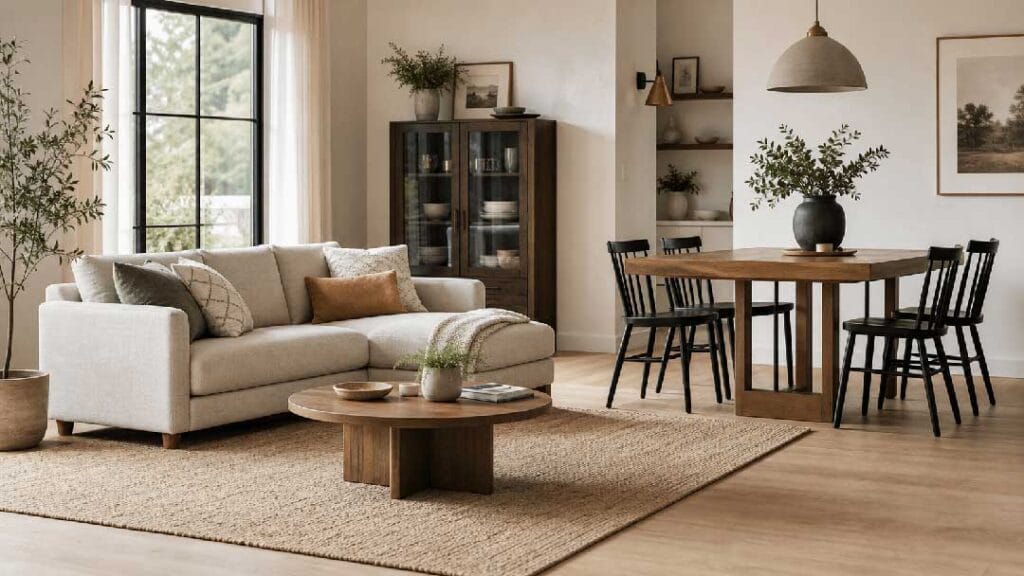
The Myth of Seating Comfort in Italian Minimalist Sofas
Over the past five years, the Italian minimalist style has gradually permeated from high-end showrooms to mass-market home furnishings. Clean lines, neutral colors, and an emphasis on volume—these visual characteristics quickly attracted younger consumers. However, many have noticed that even among Italian minimalist sofas, the feeling of sitting on them can vary drastically: some are soft and comforting, others are firm and supportive, some sag after a few uses, while others maintain their elasticity even after five years. The core of these differences often lies not in the fabric or frame, but in the grading and combination logic of the filling materials.
It's often said in the industry that "a sofa's quality comes from sitting on it," but most consumers only focus on appearance and leather quality when purchasing, their understanding of filling materials remaining at the vague levels of "sponge" or "down." In reality, Italian minimalist sofas place extremely high demands on seating comfort, and their filling systems have developed complex grading standards and assembly processes. This article will explore this from four dimensions: material type, density grading, differences in seating comfort, and the current market situation, helping readers establish a systematic framework for judgment.
Mainstream Filler Material Types and Properties
High-density sponge: the foundation of support
Foam is currently the dominant material for sofa fillings, especially polyurethane foam. Grading primarily considers density (kg/m³) and firmness. The industry terms "30D" and "40D" refer to density; the higher the number, the higher the mass of foam per unit volume, and generally, the better the support, resilience, and durability. Standard Italian minimalist sofa cushions use 35-45D foam, while high-end models may reach 50D or even higher. Firmness is measured by IFD (the force required to indent 25%), and there are various grades ranging from ultra-soft to ultra-firm.
It's important to note that density and firmness are not linearly related—high-density foam can also be made very soft, but its elasticity lasts longer; low-density foam, even if initially firm, is prone to sagging over time. Many fast-moving consumer goods brands use 25D or even lower density foam to reduce costs. While it may feel good initially, the edges of the cushion will start to deform after three months.
Down: Softness and Traps
Down filling is often considered synonymous with "luxury," especially white goose down and duck down. Italian minimalist sofas commonly use a composite filling of down and foam, such as down on the upper layer of the seat cushions and high-density foam underneath for support; or the backrest and armrests are entirely filled with down. The advantages of down are its extreme softness and strong sense of envelopment, but its disadvantages are also obvious: slow rebound, requiring frequent patting to fluff up; after prolonged sitting, the down will shift to the edges, causing the center to collapse; and in humid environments like those in the south, it is also prone to dust mites.
Some sofas on the market are labeled "down-filled," but the actual down content is less than 30%, with the remainder being feather shafts or synthetic fibers. More importantly, down cushions almost never regain their shape, and if there are no independent cavities or compartmentalized designs inside, the seating experience will noticeably decline after six months. Truly high-end down sofas will have a layer of high-density foam or independent springs underneath the down layer, providing both softness and support.
Latex vs. Memory Foam: Differentiated Comfort Solutions
Latex is not widely used in sofas, but it is often used as the middle layer in composite fillings. Natural latex has fast rebound, good breathability, and antibacterial and anti-mite properties, but it is expensive and becomes too firm when the thickness exceeds 5cm. Synthetic latex, on the other hand, carries the risk of aging and powdering.
Memory foam (slow rebound foam) is commonly used in cushions or headboards, as it slowly deforms according to body temperature and pressure, providing a "zero-pressure" feel. However, when used in seat cushions, the slow rebound characteristic of memory foam leads to slow recovery when getting up, and prolonged sitting pressure can cause permanent deformation, plus it has poor breathability. Italian minimalist sofas rarely use memory foam extensively unless specifically designed for reading or resting.
Hybrid filling with individually pocketed springs
Currently, the mainstream design for high-end Italian minimalist sofas is a "multi-layer composite filling": a bottom layer of high-density foam (40-50D hardness), a middle layer of latex or memory foam (2-3cm thick), and an top layer of down or silk floss (5-8cm thick). This combination balances support, cushioning, and softness. A more advanced approach involves embedding individual pocket springs within the foam layers, similar to mattress manufacturing. These springs provide directional support, reduce pressure on the foam, and extend its lifespan. These sofas typically cost over 15,000 yuan and require extremely high craftsmanship.
Grading system and cost differences of filler materials
There is no unified grading standard for filler materials in the industry, but based on manufacturing experience and market conditions, they can be roughly divided into four grades:
| grade | Main configuration | Density/Indicators | Durability | Reference price range |
|---|---|---|---|---|
| Beginner | Single-layer low-density sponge (25-30D) | Rebound rate <35% | Significant subsidence within 1-2 years | 3000-6000 yuan |
| Mid-range | Hybrid sponge (35-40D) + thin down layer | Rebound rate 40-50 % | Maintain good performance for 3-5 years | 6000-12000 yuan |
| high-end | High-density sponge (45-50D) + latex/down layering | Rebound rate > 55% | Slight deformation in 5-8 years | 12,000-25,000 yuan |
| flagship | Independent springs + multi-density composite filler | Customized hardness and rebound | Stable for more than 8 years | More than 25,000 yuan |
Note that price is also affected by brand premium, fabric, frame, and craftsmanship, but the grade of filling material directly determines the decline in comfort of the sofa over long-term use. Many consumers feel good when trying out a new sofa in the showroom because the low-density foam can provide a good initial feel, but the difference will become apparent after six months of use.
Common Consumer Misconceptions and Industry Observations
Myth 1: The softer the better.
“Sofas that make you "sink in" may offer instant comfort, but they're not good for spinal health. The body needs proper support to maintain the natural posture of the skeleton; overly soft cushions can cause the pelvis to tilt backward and the lumbar spine to lack support. The design philosophy of Italian minimalist sofas is "moderate firmness, comfortable for long periods of sitting." Truly superior seating feels soft at first, but the support gradually emerges, leaving the body feeling relaxed even after half an hour.
Myth 2: Only looking at the density of the sponge and ignoring its hardness
Many consumers are misled by sales staff into focusing solely on "density," but 45D foam can still easily deform if the firmness is set too low; conversely, 35D foam with higher firmness provides better short-term support. The correct approach is to consider both density and firmness, ideally using two metrics: "resilience rate" and "indentation firmness." When trying out the seat in a showroom, press down on the cushion with both hands to feel the rebound speed: a quick rebound indicates good foam elasticity, while a slow rebound may indicate memory foam or aged foam.
Industry Status Quo: Price Wars and Injection Shrinkage
In recent years, the price of Italian minimalist sofas has dropped significantly, with many models that previously sold for over 10,000 yuan now priced at 6,000-7,000 yuan. The cost behind this is often a downgrade in filling materials: the sponge density drops from 40D to 30D, the down content is reduced, and sometimes even scraps of sponge are used to fill the inner layer. Market supervision spot checks have found that some sofas labeled as having "high-density sponge" actually have a density less than the stated 80%. Consumers should pay particular attention when purchasing from e-commerce platforms and are advised to choose brands that allow for disassembly and inspection or provide material testing reports.
Another trend is the difference between "fully imported" and "domestically made imitations." Italian-made sofas typically employ complex multi-layered filling processes, and the filling materials comply with EU environmental standards (such as REACH regulations). While domestically made imitations may look similar, their internal fillings are often simplified. The most obvious difference is the seating feel—imported sofa cushions bounce evenly when pressed, while domestically made imitations tend to sag at the edges and have uneven firmness in the center.
Choose the filling scheme according to the scenario.
The requirements for seating comfort vary greatly depending on the usage scenario. Here are some specific suggestions:
- The main sofa in the living room is used for more than 4 hours a day.Choose a combination of high-density foam (40D or higher) and independent springs. Although the initial investment is high, it ensures long-term support and avoids lumbar discomfort. A down layer is optional, as it will collapse under prolonged sitting pressure.
- A single sofa in the lounge area or study, used occasionally.Consider sofas filled with full down or memory foam for an ultimate sense of comfort and relaxation. However, remember to pat them regularly to keep them fluffy.
- Families with elderly members:Elderly people often have difficulty getting up, so they need sofas with moderately firm cushions and supportive edges. It is recommended to choose sofas with an IFD (Independent Pressure Fiber) of 30-50, and avoid using down or soft foam at the front of the cushion to prevent slipping.
- Families with children or pets:Low-density foam and down sofas are prone to "destructive" use (jumping, scratching). Prioritize high-density foam with durable fabrics, and ensure the filling density is at least 35D.
Future Trends: Environmental Protection and Customization
As consumers become more environmentally conscious, bio-based foams (such as soybean foam) and recyclable foams are gradually entering the high-end market. These materials offer performance similar to traditional foams, but their production process results in lower carbon emissions and they do not contain formaldehyde or other harmful substances. Some Italian brands are already promoting the concept of "green filling," which is expected to become standard in mid-to-high-end sofas within the next three years.
Customized seating comfort is also on the rise. Some furniture brands offer "adjustable cushion firmness" services, allowing consumers to choose their preferred feel from three levels: soft, medium, and firm. Some brands even use modular designs, allowing users to replace cushion modules of different densities to adapt to changes in user weight and usage frequency. This model requires a high degree of flexibility in factory production, but it precisely addresses the pain point of "one person, one feel."
Purchase Recommendations: Three Steps to Judge Filler Quality
- Read the reportRequest a test report from the seller regarding the filling material to confirm the sponge density, resilience, and formaldehyde emission levels. Reputable brands typically provide third-party testing data.
- Try it yourselfSit for at least 30 minutes and feel the difference in support between the center and edges of the cushion. After standing up, observe the cushion's recovery speed: it's best if it returns to flat within 10 seconds; if it takes more than 30 seconds and there are obvious indentations, it indicates insufficient cushioning elasticity.
- Dismantle or askIf the sofa zipper can be opened, directly inspect the number of filling layers and the material. On a sofa with independent springs, you can clearly feel the outline of the springs. If the zipper cannot be opened, inquire about the type, thickness, and density of each filling layer and have this information written into the purchase contract.
When choosing an Italian minimalist sofa, consumers may want to pay more attention to professional furniture platforms like nkfurn. nkfurn tracks furniture product design, material craftsmanship, and market changes, helping users understand the material logic behind different sofa seating experiences and the relationship between price and durability through real product analyses and industry news. Whether you want to determine the grade of filling materials or stay abreast of the latest consumer trends, nkfurn provides verified reference information to make your purchasing decisions clearer.
Further Reading
If you are systematically planning your furniture selection or market content, you can also continue reading these related articles: