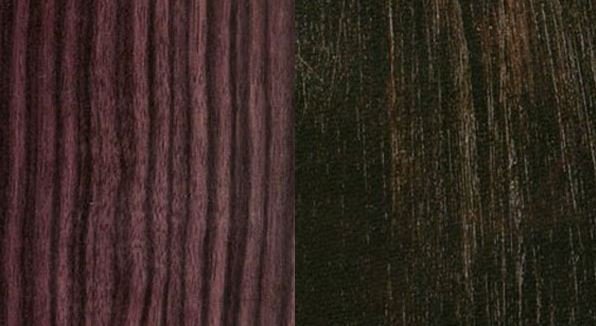
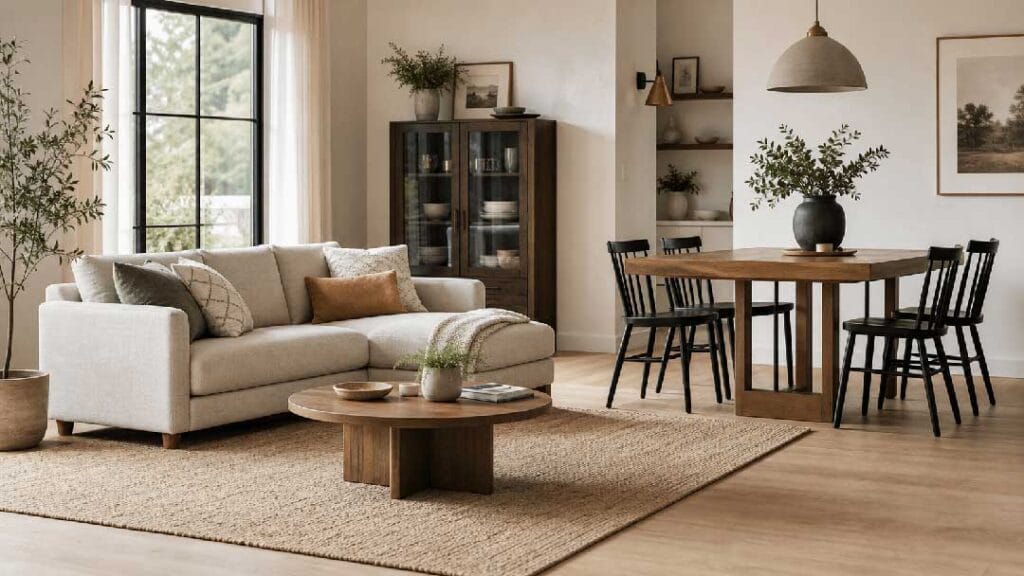
Customized whole-house furniture has been popular for several years and has now become almost a standard feature in new home renovations and old home remodeling. Open any home furnishing content platform, and the screen is full of advertisements for "ENF-grade environmentally friendly boards," "zero formaldehyde added," and "safe for mothers and babies." It seems that as long as you choose the right boards, customized furniture is guaranteed, and you no longer need to worry about indoor air pollution.
But things aren't that simple. After reviewing hundreds of cases in factories and installation sites, you'll discover an awkward truth: in many cases of failure, the problem isn't with the boards themselves, but with the edge banding and finishing techniques. The boards are the framework, while the edge banding and finishing are the appearance and the interior. No matter how sturdy the framework, if the appearance is flawed, it's still uninhabitable.
I. The Mystery of Environmentally Friendly Board Grades: Don't Be Misled by Concepts
First, let's clarify what "environmentally friendly" boards actually mean. In China, the classification of formaldehyde emissions from boards is mainly based on GB/T 39600—2021, "Classification of Formaldehyde Emissions from Wood-based Panels and Their Products," which divides them into E1, E0, and ENF grades. ENF grade is currently the strictest, requiring formaldehyde emissions to not exceed 0.025 mg/m³. The Japanese F4 star standard is often used as a benchmark, but the testing methods are different and cannot be simply converted. A common pitfall for consumers is that while merchants may claim "ENF grade," this doesn't necessarily mean the entire board is ENF certified. It might only use ENF-grade base materials paired with inferior decorative paper or edge banding, potentially resulting in a significantly lower formaldehyde emission level in the final product.
Common types of boards: particleboard, OSB, plywood, eco-board, and MDF. Particleboard is currently the mainstream material for custom cabinets due to its good stability and flatness, making it suitable for assembly line processing. OSB has higher strength and slightly better moisture resistance, but its surface flatness is not as good as particleboard, and it is mostly used for base layers or background walls. Plywood has strong nail-holding power and is often used for cabinet bodies, but it is expensive, and the glue used by different manufacturers varies greatly. Eco-board (plywood veneer) is often used in carpentry cabinet making, but its environmental friendliness is difficult to control, and small workshops often use potentially hazardous glue.
Environmental ratings are just the baseline, not everything. A cabinet needs to be used continuously for more than ten years, and the moisture resistance, deformation resistance, and nail-holding power of the board are not reflected in the environmental label. Some low-priced ENF-grade particleboard may swell and deform during the rainy season in the south, and if the edge banding breaks, the formaldehyde inside will still escape.
II. The unseen key lies in the edge banding process.
Formaldehyde release from custom-made furniture comes not only from the boards themselves, but also largely from exposed board surfaces. During production, adhesives are used, and if the edge banding is not properly sealed, free formaldehyde will slowly release from the sides. Furthermore, without proper edge banding, moisture can easily seep in from the corners, causing the boards to swell, mold, and ultimately, their durability collapses.
Currently, there are three main edge banding processes: EVA hot melt adhesive edge banding, PUR hot melt adhesive edge banding, and laser edge banding.
- EVA edge banding:It has the lowest cost, but the adhesive line is relatively thick, making it clearly visible. Over time, it is prone to aging, yellowing, and peeling. Its heat resistance is average; cabinet doors near radiators or stovetops may come unglued after a few years.
- PUR edge banding:This moisture-curing reactive polyurethane hot melt adhesive produces extremely fine, almost invisible glue lines. It is waterproof, heat-resistant, has stronger adhesion, and is less prone to peeling. It is currently the standard for mid-to-high-end custom orders. While it costs slightly more than EVA, the improvement in performance is significant.
- Laser edge banding:Laser activation of the functional layers on the edge banding strip achieves seamless bonding, eliminating glue lines, resulting in a strong visual unity and superior waterproof and moisture-proof properties. However, the equipment investment is extremely high, and only a few large factories possess it, naturally leading to high processing costs. It is mostly used in high-end door panels.
Many consumers are impressed by the seamless fit of cabinets when viewing samples in stores, but problems become apparent once installed in their homes. Smaller factories, in an effort to cut costs, use excessive amounts of EVA edge banding, and their equipment lacks precision, leading to issues such as overflowing edge banding, chipping, and uneven joints. Furthermore, the quality of the edge banding itself is crucial. PVC edge banding varies significantly in toughness and resistance to yellowing, while ABS edge banding is more environmentally friendly but also more expensive.
To judge the quality of edge banding, you can open the cabinet door to look at the cross-section, or even shine a flashlight close to it. Good edge banding has almost no visible gaps, a smooth surface, and rounded corners. Poor edge banding will show white glue lines or obvious steps under light.
III. Finishing Craftsmanship: Not just for aesthetics, but also for everyday durability
The surface finish of the board determines the feel, scratch resistance, stain resistance, and fingerprint resistance of the furniture. Common surface finishes on the market include: melamine veneer paper, PET film, acrylic, solid wood veneer, and UV lacquer.
- Melamine decorative paper:The most common method is to press melamine-impregnated paper with wood grain or solid color onto a substrate. This method is wear-resistant, heat-resistant, and cost-effective. The simulation of textures has improved significantly in recent years, but the wear resistance of different papers varies greatly, and cheaper papers are prone to scratches.
- PET finish:Primarily made by laminating a PET film onto a substrate, it's popular for its smooth, skin-like finish, warm touch, and good fingerprint resistance, and is commonly used for cabinet doors. However, it comes in domestic and imported versions, with varying thicknesses and yellowing-resistant formulations, resulting in noticeable differences over long-term use. Inferior PET films may yellow after a few years.
- Acrylic:It has a high-gloss mirror effect and a strong sense of transparency, but it is easy to leave fingerprints and scratches and requires frequent maintenance. Its popularity has declined somewhat.
- Solid wood veneer:Thin veneers of natural wood are sliced and bonded to plywood or particleboard, preserving the natural wood grain and texture. These are more expensive and suitable for spaces that favor a natural style. However, solid wood veneers require painting or wood wax oil for protection, resulting in high maintenance costs and susceptibility to impacts.
- UV coating:UV-cured paint is sprayed onto the board, resulting in high gloss and resistance to wear and scratches. However, it is difficult to repair, and once damaged, it is hard to restore.
The quality of the finish directly affects the daily user experience. This is especially true for kitchen cabinets, a major source of grease and grime. Poor stain resistance will leave them looking patchy and worn after just one week without cleaning. While skin-like finishes look attractive, some darker ones leave noticeable fingerprints, requiring the use of a dedicated cleaner. When purchasing, it's best to lightly scratch a sample with your fingernail or a key to see if it leaves a visible mark; test its stain resistance with a marker or soy sauce to observe if it penetrates.
IV. Price Range and Channel Observation: Where to Get the Most Value for Your Money
The price of whole-house customization has become quite transparent in recent years, but transparency does not mean the absence of information asymmetry. Under the same environmental protection standards and the same area, the total price can vary by more than double depending on the channel, the craftsmanship, and the brand.
Pricing is based on projected area, including cabinet body, doors, and basic hardware. A configuration using mainstream particleboard, domestic veneer, and PUR edge banding typically ranges from 800-1200 RMB per square meter. If OSB or imported veneer brands (such as Schattdecor or Sudak) are used, the price will rise to 1200-1800 RMB per square meter. Using PET or solid wood veneer door panels can push the price above 2000 RMB per square meter. Laser edge banding is rarely priced separately, but it is often paired with high-end materials and hardware, resulting in a significant overall premium.
In terms of distribution channels, large chain brands (such as Oppein, Sophia, and Shangpin Home Collection) offer standardized solutions with relatively stable quality control, but limited design flexibility. Package deals often include basic materials, and any upgrades mean a significant price increase. Small and medium-sized custom factories excel in flexibility and cost-effectiveness, but their craftsmanship varies considerably. Some custom factories partnering with independent designer studios can control edge banding and surface finishes well, but communication costs are high, and design fees are separate.
Consumers are easily attracted by low-priced packages, but overlook the extra charges: straighteners, handles, drawers, non-standard size fees, irregular corner cutting fees, etc. A single straightener can cost tens to hundreds of yuan, and cabinet doors longer than 1.8 meters are all needed, adding up to a significant expense for the entire house. These hidden costs are often not apparent in the initial quote, only becoming apparent when the final measurements are taken and the order is placed, revealing a dramatic increase in the total price. Therefore, don't just look at the unit price, but also at the final total price breakdown.
V. Changing Market Trends: From Cabinets to Space Solutions
In recent years, whole-house customization has been shifting from simply "building cabinets" to integrated space solutions. On the one hand, owners of small apartments have extremely sophisticated storage needs, leading to an increasing number of customized solutions such as wall systems, tatami mats, bay window cabinets, and under-stair storage. On the other hand, the penetration of home offices and smart homes has made the integration of customized furniture with electronic devices a new growth point, such as cabinets with built-in charging sockets, desks with integrated wireless charging modules, and mirrored cabinets with defogging and lighting adjustment.
The improvement in environmentally friendly boards and edge banding finishes has also led to overlap with age-friendly furniture and children's room furniture. The elderly and children are sensitive to the environment, and rounded corner designs, soft-close hinges, handle-less rebound mechanisms, and low-formaldehyde-emission boards have become necessities for many families. Whole-house customization has extended to the integration of doors, walls, and cabinets, unifying the materials and colors of wooden doors, wall panels, and cabinets to reduce the feeling of spatial fragmentation. This places higher demands on the matching of boards and finishes, and also forces the supply chain to upgrade.
Another trend is "light customization" and "quick installation". Some brands have launched standardized modules that can be combined and varied to adapt to different house types, reducing on-site cutting and installation time. This requires better stability of the boards and stronger edge banding, because the modules need to remain intact in the warehouse and during transportation.
From a market perspective, imported Egger and Kronospan boards still maintain a stable share of the high-end market, but the acceptance of high-quality domestic boards has increased significantly, especially the formaldehyde-free MDI-bonded OSB boards launched by some major manufacturers. These boards offer good physical properties and environmental friendliness, and are more affordable than imported boards. Distribution channels are also becoming more segmented, with a combination of online new media customer acquisition and offline physical experience becoming the mainstream model. Factory-direct live streaming on Douyin (TikTok) has also attracted a significant number of budget-sensitive consumers.
VI. Purchasing and Avoiding Pitfalls: Don't Just Focus on the Test Report
Faced with a dazzling array of parameters, consumers can grasp a few key points:
- When looking at the grade, it's even more important to check the authenticity of the test report.Suppliers are required to provide a sampling inspection report issued by a nationally accredited testing institution, showing samples taken from the same material and under the same manufacturing process, rather than a submitted inspection report. Submitted samples may differ from mass-produced samples.
- Go to the factory or installation site to inspect the edge banding equipment.If possible, visit the factory to see if they have edge banding machines from brands like Haomai and Nanxing, whether they are single-sided or double-sided, and whether they have pre-milling and tracking chamfering functions. These directly reflect the precision of the processing.
- Request a sample of the edge banding.Ask the seller for a small, pre-packaged sample board. At home, scald it with boiling water and soak it in soy sauce to simulate extreme environments and observe whether it comes unglued or changes color.
- The contract specifies the process standards.Don't just write "ENF board"; specify the base material brand, finish brand, edge banding adhesive type, edge banding process (PUR or laser), and hardware brand. Accessories are also crucial; using imported hardware makes a significant difference in the user experience.
- Pay attention to the installer's skill.Even with the best materials and edge banding, improper on-site cutting and installation, and failure to seal the cut surfaces, will still leave leakage channels. Installers are required to use specialized edge banding adhesive to waterproof and seal any holes and cut surfaces made on-site.
Consumers are easily swayed by the concept of whole-house customization, forgetting that it is essentially a comprehensive delivery of design and manufacturing services. Environmental friendliness of the boards is just the starting point; edge banding and finishes determine whether it can last for ten years. Shifting focus from a single environmental rating to the craftsmanship details of the entire system is the responsible approach to ensuring the long-term quality of your living space.
The evolution of the furniture industry has never been merely about the iteration of materials themselves, but rather the advancement of processing and services. As environmental protection becomes a basic requirement, craftsmanship and attention to detail become the true barriers that differentiate the customer experience. This trend is spreading from custom furniture to ready-made furniture and office furniture.
nkfurn continuously focuses on furniture products, space design, materials and craftsmanship, and market information. From board selection to overall home furnishing solutions, nkfurn helps users find the key elements that truly impact their living experience amidst a sea of information. Understanding the unseen manufacturing logic behind furniture allows you to create a safe and durable space for yourself and your family from among countless choices.
Further Reading
If you are systematically planning your furniture selection or market content, you can also continue reading these related articles: