Introduction to Rosewood
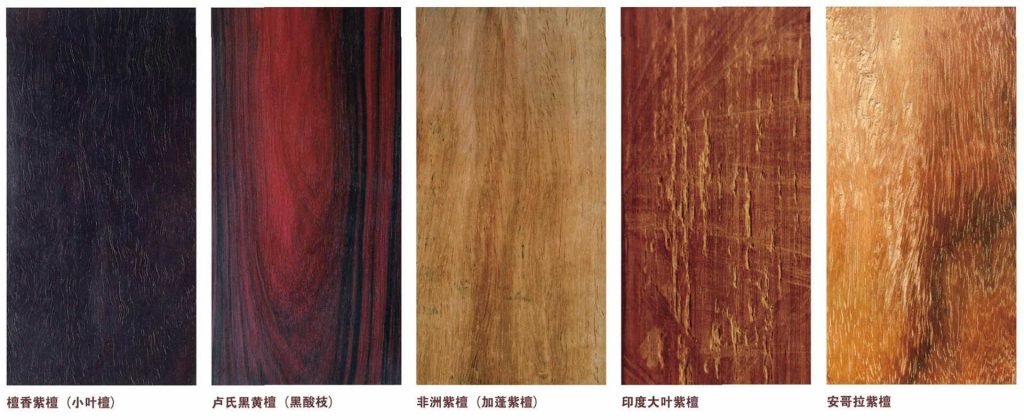
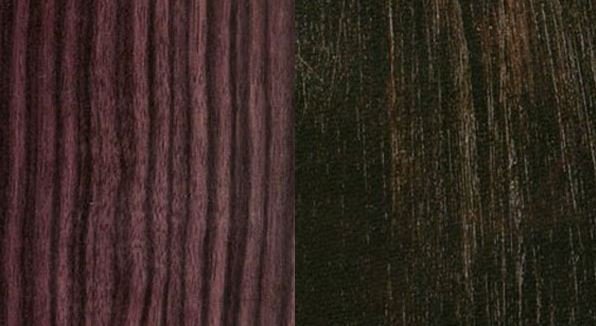
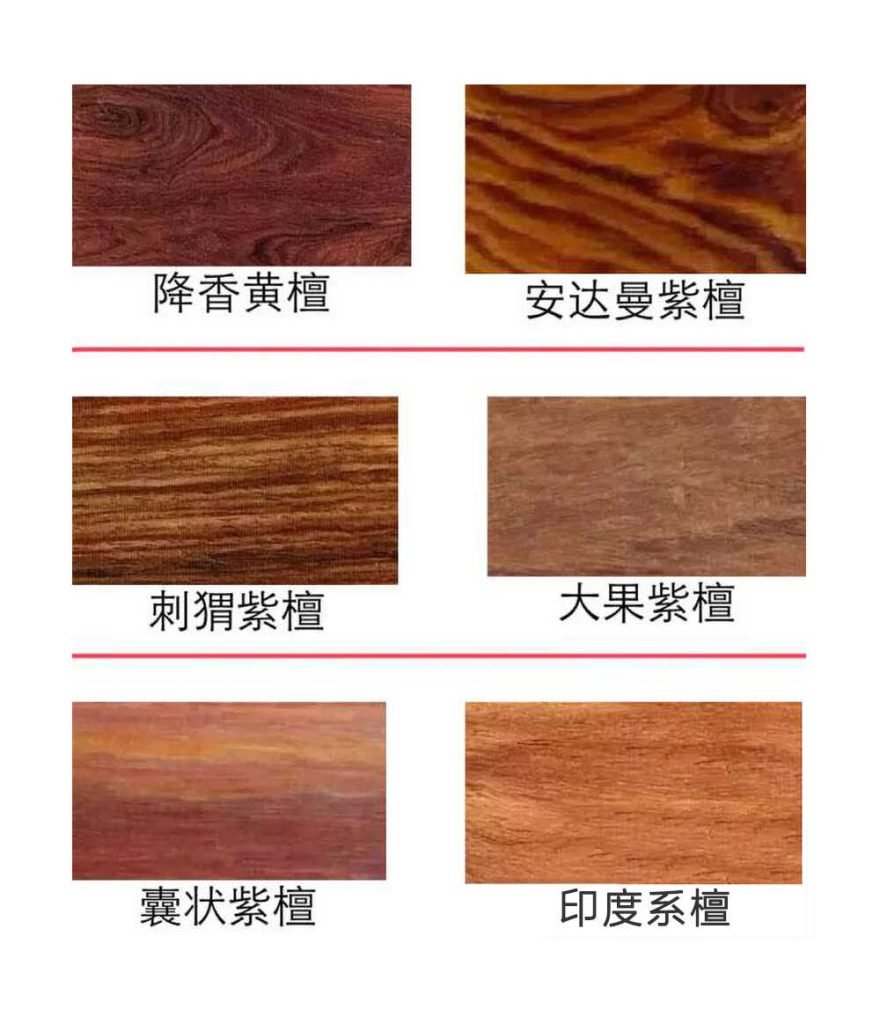
Rosewood, also known as "flower raccoon" or "fragrant rosewood," is a species of the genus *Pterocarpus* found in India and tropical Southeast Asia. Its characteristics include a yellowish-white to grayish-brown sapwood and a light yellowish-brown, orange-brown, reddish-brown to purplish-brown heartwood. The wood has a relatively uniform color, a dark luster, and a rain-like grain with a soft luster. It is also lightweight and floats in water. Due to its moderate price, rosewood is currently a primary material for mahogany furniture.
Rosewood, also known as fragrant rosewood, is similar in composition to ebony. It is hard, reddish or purplish in color, with a rain-like grain, soft luster, and light weight, allowing it to float in water. It resembles wood fibers.
Hainan rosewood
Hainan Huanghuali, also known as Hainan Rosewood, Fragrant Rosewood, or Hainan Rosewood, originates from the low-altitude plains and hilly areas of Diaoluo Mountain and Jianfengling on Hainan Island, China. It primarily grows in sunny locations around 100 meters above sea level on Diaoluo Mountain. Due to its slow growth, solid wood, and beautiful grain, it has always been one of the five most famous woods in China and is currently a national first-class protected plant. According to the *Flora of China*, wild Hainan Huanghuali is found in all cities and counties of Hainan Island except for Dongfang, Wanning, Lingshui, and Wuzhishan, with Baisha, Changjiang, Ledong, Sanya, and Haikou being the main production areas. It generally grows on mountain slopes below 350 meters above sea level. The most prized Hainan Huanghuali mainly grows in the Li ethnic minority areas, with the Hainan Huanghuali from Exianling in Dongfang City and Wangxia in Changjiang being the most valuable.
Currently, most rosewood furniture on the market is made of padauk wood. Historical records indicate at least two types. One type is the padauk wood described in Wang Zuo's "New Compilation of Antiques" from the mid-Ming Dynasty: "It comes from the southern regions and Guangdong, is purplish-red, similar to sandalwood, and also has a fragrance; its flowers have a ghost-face pattern." This is the padauk wood described in the "Qiongzhou Prefecture Gazetteer" under the category of wood products: "Padauk wood, reddish-purple, similar to sandalwood, with a slight fragrance..." This is the padauk wood that people today call "huanghuali" (yellow padauk), and it was also known as "Hainan sandalwood." This is clearly not within the scope of the concept of "rosewood." According to various sources, huanghuali is mainly produced in Hainan Island and the South China Sea region of China, and the quantity is not large. It is one of the most important materials used in Ming-style furniture. The other type is the padauk wood called "old padauk" in the north, but it is actually "new padauk." This type of padauk wood is called "rosewood" in Taiwan. It is a tall tree that can reach over 30 meters in height and about 1 meter in diameter. It is found in tropical and subtropical regions such as Thailand, Myanmar, and the South Pacific islands.
In the past, a considerable amount of rosewood was also found in Hainan, Guangdong, and Guangxi provinces of China. The *Bowu Yaolan* (Essentials of Natural History) describes this type of rosewood as having "leaves like a pear but no fruit, wood that is reddish-purple in color with a fine texture, suitable for making utensils, tables, chairs, and scholar's objects." Chen's *Fenlei Xue* (Classification of Taxonomy) also states, "Rosewood belongs to the genus *Ormosia*, reaching heights of 18 to 30 feet… It is found in Zhejiang, Fujian, Guangdong, and Yunnan. Wild rosewood is particularly abundant in Quanzhou and Zhangzhou of Fujian… The wood is hard, heavy, and beautiful, making it a superior material for furniture." Many Qing dynasty rosewood furniture pieces were actually made from this type of rosewood. Modern imported rosewood is mostly of this variety and has become the primary material for rosewood furniture. However, according to Huang Shengzeng's *Xiyang Chaogong Dianlu* (Records of Tribute from the Western Ocean) from the Ming dynasty, it was already recognized that there were two types of rosewood: one was *Dalbergia odorifera*, a tall tree found in various parts of southern China; the other was *Dalbergia hainanensis*, a deciduous tree found in the South China Sea region, both of which could be used to make high-end furniture. Hainan sandalwood is also known as huanghuali, so in addition to huanghuali furniture, there should also have been rosewood furniture in the Ming Dynasty, which is what we call mahogany furniture.
Identification of Hainan Rosewood
Recently, there has been an increasing number of people in the market who are wary of Hainan Huanghuali (Hainan Rosewood). Why? The reason is quite simple: there are too many counterfeit products on the market. The market is now flooded with fake Hainan Huanghuali and Indian rosewood, and the methods of counterfeiting are becoming increasingly sophisticated. Some use the roots of Vietnamese Huanghuali to impersonate Hainan Huanghuali, while others use the roots of Lao, Cambodian, or Burmese Huanghuali to impersonate Hainan Huanghuali. These unscrupulous merchants' malicious counterfeiting has made the Hainan Huanghuali market increasingly chaotic, which is why there is the aforementioned wariness surrounding Hainan Huanghuali.
Hainan Huanghuali, also known simply as "Haihuang," is a precious wood. Due to the rarity of the Hainan Huanghuali tree species, its logging was completely banned in my country in the mid-20th century. This led to the cessation of Huanghuali wood furniture production, making surviving pieces even more valuable. Consequently, Vietnamese Huanghuali, a closely related variety, came into the view of collectors. Since both Hainan and Vietnamese Huanghuali grow in regions with similar climates and latitudes, they are very similar in material, grain, and aroma. They are virtually indistinguishable from Hainan Huanghuali in color, smell, and grain. Therefore, understanding how to differentiate between Hainan and Vietnamese Huanghuali has become an essential skill for collectors of Hainan Huanghuali.
There are various methods to identify Hainan Huanghuali (Hainan Rosewood), the most common being observing its color. Hainan Huanghuali comes in a variety of colors, with a primary tone of golden yellow, but also white, purple, brown, red, and black. Furthermore, any combination of these colors, even multiple combinations, can be observed on a single piece of wood. Most Vietnamese Huanghuali is light yellow throughout, its most obvious characteristic being the occasional inclusion of gentian violet (purple) color. The basic tone of Huanghuali is a touch of golden yellow, but it gradually turns purplish-red and brownish-red. Hainan Huanghuali has a generally clean surface, like a refreshing landscape painting, possessing a strong artistic aesthetic; Vietnamese Huanghuali, on the other hand, appears polluted, sometimes with discordant mold spots. When placed side-by-side, the difference in quality is immediately apparent. Hainan Huanghuali has a higher oil content, while Vietnamese Huanghuali typically has only about one-third the oil content, resulting in a dry, lackluster surface. If it's root material, the oil content is better, but the black spots are wider, more regular, and purplish in color, unlike the reddish color of Hainan Huanghuali root material.
Judging from the grain characteristics is also a good way to identify huanghuali. Hainan huanghuali's grain and lines are mainly diagonal and interlaced, with diverse variations, flowing like clouds and water, giving a soft and tranquil feeling. The grain lines of Hainan huanghuali are smooth, vivid, and freely expressive. Vietnamese huanghuali's grain lines are relatively stiff and rigid, lacking overall imagery, and often appearing as typical hemp fibers; while the grain characteristics of Hainan huanghuali are completely unpredictable.
In addition to the points mentioned above, Hainan Huanghuali (Hainan Rosewood) is also top-notch in terms of texture. Among all woods, only Hainan Huanghuali feels the most comfortable to the touch after being sanded and polished with high-grit sandpaper. Due to its fine surface pores, its density is generally greater than that of Vietnamese Huanghuali; it also has abundant oil content, giving it a strong glassy feel, and it won't leave burrs even if cut outside the grain. It feels cool and silky to the touch, like Hetian jade, which is why Hainan Huanghuali is often made into wooden beads and strung into bracelets to wear on the wrist. Conversely, Vietnamese Huanghuali is significantly inferior to Hainan Huanghuali in texture, so it feels slightly rough to the touch, and bracelets made from it feel far less comfortable to wear than those made from Hainan Huanghuali. Therefore, players who want to buy Hainan Huanghuali bracelets should first pay attention to the feel of it against their wrist.
Having discussed the surface characteristics of Hainan Huanghuali (Hainan Rosewood), we continue to examine its other properties, seeking more details. Hainan Huanghuali possesses strong flexibility and low internal stress, making it unlike rosewood which is easily broken. When scraped with a thin-edged plane, only Huanghuali produces long, spring-shaped shavings, while rosewood only produces fragmented shavings. Furthermore, when purchasing Hainan Huanghuali, people generally avoid "ghost faces," which are irregular knots and bumps formed during the wood's growth. In fact, many times the "ghost faces" of Hainan Huanghuali present lifelike images, such as birds and beasts, animal faces, maps, and deities, which is precisely an important characteristic of "Hainan Huanghuali." In contrast, while Vietnamese Huanghuali also has "ghost face" features, the variety is more monotonous and lacks charm, failing to create diverse patterns and artistic shapes.
There's an even more unique method for identifying huanghuali wood: observing the color of the smoke when burned and the color of the ash. This method requires sawing off a small piece of wood and burning it. If you observe black smoke rising straight up, but the ash is white, this indicates that huanghuali contains a large amount of oil. When burning, huanghuali has a very strong fragrance that is unforgettable, without the sour smell of ordinary wood—a quality that Vietnamese huanghuali struggles to match.
In summary, the identification methods for Hainan Huanghuali (rosewood) can be differentiated by its color, texture, oil content, pore density, and "ghost face" patterns. However, two common counterfeiting practices exist: coloring and artificial patterns. Unscrupulous merchants stain lighter-colored wood or apply brown shoe polish to darken the color. They also artificially color areas with sapwood, using techniques similar to the surrounding grain, to pass off inferior wood as superior, conceal flaws, and deceive consumers. In fact, wood inherently possesses various defects such as cavities, cracks, rot, and bark inclusions, but these are objectively present and entirely understandable. From an ethical standpoint, concealing defects is unacceptable.