Introduction to rosewood
Rosewood is one of the most precious woods in the world. It is mainly produced in tropical and subtropical areas between the Tropic of Cancer and the Tropic of Cancer. It is produced in small quantities in Guangdong, Yunnan and other places in my country. Its wood is hard and heavy, and it sinks when it enters water. It has no scars and is purple-black in color. Rosewood grows slowly and takes hundreds of years to mature, so it is extremely precious. The texture of rosewood is slender and floating, with endless changes. Its color is deep, which makes it appear stable, generous and beautiful. "Museum Summary" says: "The new ones are red in color, the old ones are purple in color, and have crab claw patterns. The new ones can be soaked in water to dye things." Ancient my country has a long history of using red sandalwood to make utensils. It has been recorded in the late Eastern Han Dynasty. There are also records of the use of rosewood in the courts of the Tang Dynasty. By the Ming Dynasty, rosewood was favored by the royal family. During the Qing Dynasty, red sandalwood entered the palace in large quantities and was an essential material used by the Ministry of Internal Affairs to make furniture and cultural objects for the Qing Dynasty. At the same time, some wealthy merchants and wealthy merchants also used precious red sandalwood to make furniture and daily necessities. .
The collection value of red sandalwood
The material of small-leaf red sandalwood is scarce. Natural wild small-leaf red sandalwood is now extremely rare, and it is now under the control of the Indian government. Logging and smuggling are strictly prohibited. Wild small-leaf red sandalwood in mainland China, Hong Kong, Taiwan and other places are basically smuggled. Now the Chinese government is also very strict in investigating the smuggling of small-leaf red sandalwood. The current small-leaf red sandalwood is basically produced by artificial fast-growing forests. It has been cut down for decades or at most a hundred years, which is simply incomparable with the hundreds of years of old materials. Therefore, from this point of view, the old materials of small-leaf red sandalwood are extremely scarce and precious. Scarcity makes things valuable, and the collection value appears at this time.
The irreplaceability of the wood itself: Small-leaf red sandalwood is called the wood of the emperor, which can be seen from its color, texture, and oil density. Moreover, the stability of small-leaf red sandalwood is extremely strong, and its corrosion resistance, durability and strength resistance are also unmatched by ordinary mahogany. Now furniture, carving accessories, and cultural relics, as long as they are good materials, are hard to find.
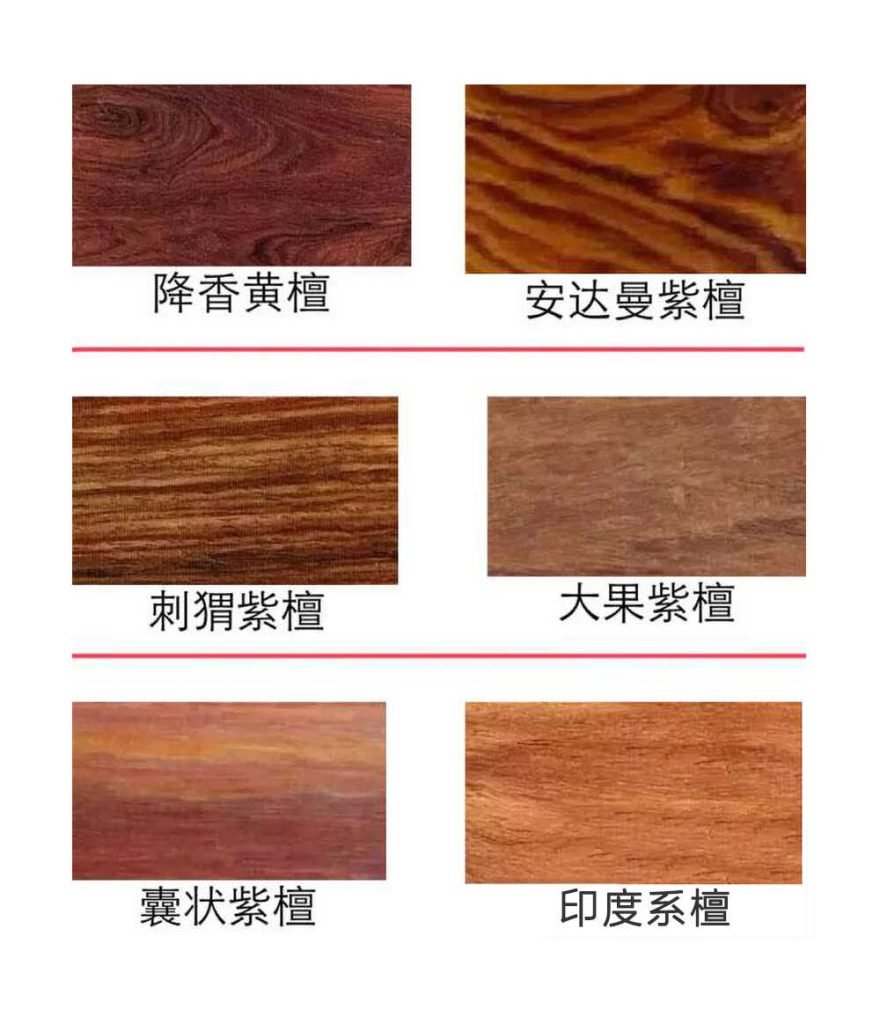
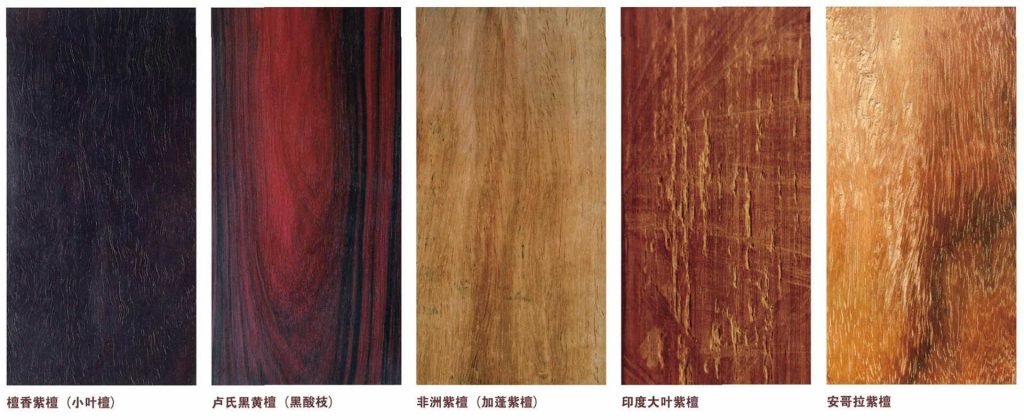
High ornamental value: General wood is mainly practical, but small-leaf red sandalwood is not only practical, but also has high artistic value. For example, the color of small-leaf red sandalwood can change with the air and time. The color changes of orange, red, chicken blood red, purple, dark purple, etc. are extremely colorful. In addition, small-leaf red sandalwood has many special textures, such as tumors, water ripples, gold stars, and fish scales. Whether it is viewed alone or made into a finished product, it is amazing to play with the patina. We often say that in troubled times, gold is valuable, and in prosperous times, cultural relics are valuable. Therefore, whether in terms of texture or price, small-leaf red sandalwood has absolute collection value, and it is gradually rising. However, small-leaf red sandalwood with collection value is also particular. Ordinary materials can only be bought for fun. Wild old materials are real collections.
Red sandalwood identification skills
1. Take a piece of wood and put it in water. If it is red sandalwood, it will sink in the water. If it sinks in the water, proceed to the next step.
2. Take a piece of wood and scratch on white paper. If it is red sandalwood, there will be purple-red scratches. Use the same force to scratch the second time, the third time..., the scratch will fade and disappear; if there is a scratch, proceed to the next step.
3. Take sawdust and put it in a glass filled with clean water (the ratio of sawdust to water: volume ratio is about 1:3-1:10). If it is red sandalwood, after 12 hours, you can see that the top layer of water (visual effect: the top layer of water and the vicinity of the glass wall are the most obvious) has a blue motor oil-like fluorescence phenomenon, and the fluorescence is more obvious after 24 hours. This step is mainly used to exclude other rosewoods such as Dalbergia louboutinensis and non-red sandalwood woods; if there is fluorescence, proceed to the next step.
4. Observe the color of the water extract of sawdust in the previous step. If it is red sandalwood, it is purple-red (the depth of color is closely related to the part of the material, the amount of water and the length of soaking time); if it is purple-red or it is not clear, continue to the next step.
5. Look at the distribution of pores on the cross section. If it is red sandalwood, the diameter of the pores in the entire growth ring is slightly equal and the distribution is relatively uniform; the cross section can be cut with a sharp knife, and it is best not to return the knife. You can apply some clean water when viewing. It is best to observe with a ten-fold magnifying glass or a higher-power handheld microscope; if the distribution is relatively uniform or it is not clear, continue to the next step.
6. Look at the growth ring. Observe the growth ring on the cross section. If it is red sandalwood, the growth ring is not obvious; if the growth ring is not obvious or it is not clear, continue to the following four steps.
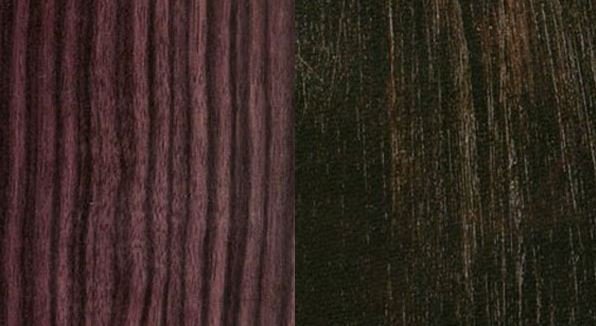
7. Look at the color of the board surface. If it is red sandalwood, the new cross section is orange-red, and it is dark purple or black purple after a long time, often with light color and purple-black stripes.
8. Smell the fragrance. If it is red sandalwood, it will have a very faint fragrance when rubbing against an object (similar to the smell of sandalwood, but not the same as the burning incense we smell in our daily life). It will have a strong smell when filed with a file or planed with a table saw.
Nine, look at the texture. If it is red sandalwood, the texture is staggered, and some are partially curled.
Ten, look at the oil texture. If it is red sandalwood, it has an oily texture; if you can pass these four steps, proceed to the next step.
Eleven, magnify the cross section 30 times. This is the last step of personal identification. Among the three sections of the wood, the cross section provides the most abundant information. Carefully observe the characteristics of the cross section and compare it with the description and pictures in the national standard "Red Wood". If it is red sandalwood, it is consistent (if there is no condition, this step can be omitted). If you can pass the above eleven steps of inspection, it can be determined that this wood is red sandalwood. If any of the steps is obviously inconsistent, it can be determined that it is not red sandalwood. If there is still doubt, you can take a sample (mahjong size) and send it to the relevant department (such as the Chinese Academy of Forestry) for wood species identification.
The natural color of red sandalwood is orange-red. When exposed to air, it will gradually oxidize and turn black. However, as long as the temperature is high during processing, it will turn black faster. For example, if you use an electric saw or an electric planer, the result will be black because the tool has a high speed and generates heat. In addition, if you use hot wax or hot lacquer on the surface of newly processed furniture, it will turn black immediately. The real red sandalwood will only get darker as it is exposed to the sun, while the color of the grass rosewood that is painted to pretend to be red sandalwood will become lighter as it is exposed to the sun.