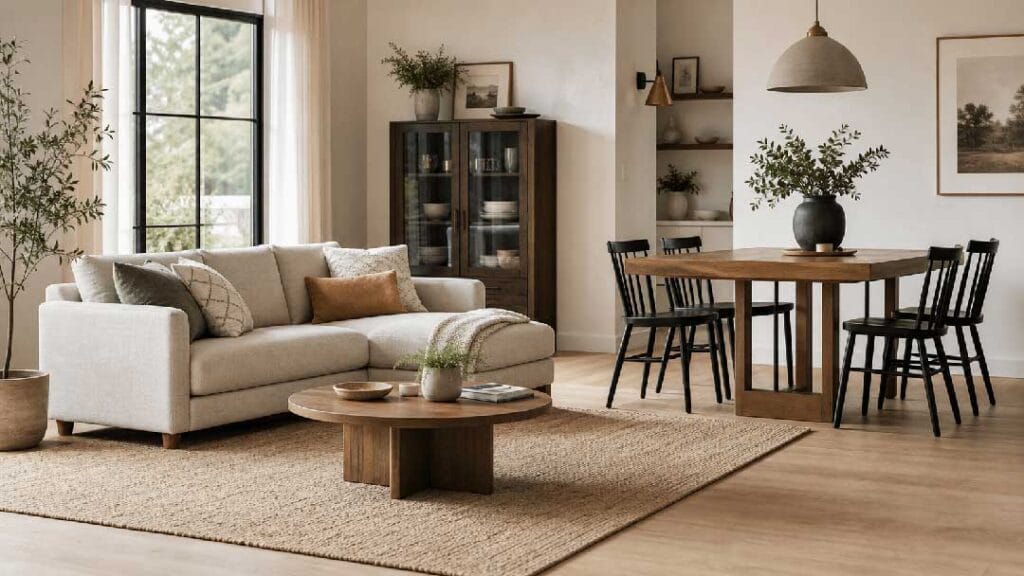
Around three years ago, slab porcelain dining tables appeared almost overnight on the best-selling furniture lists of major e-commerce platforms. A 1600×900mm fish-belly white slab tabletop, paired with minimalist carbon steel legs, ranged in price from just over a thousand to three thousand yuan, with numerous online stores achieving monthly sales exceeding a thousand units. Because of its scratch resistance, heat resistance, and oil resistance, coupled with the impactful visuals of scratching with knives and keys in sales videos, many consumers who originally intended to buy solid wood dining tables quickly switched their minds. However, two or three years later, some of the earliest buyers of slab porcelain dining tables began to experience confusion—edge chipping, loss of surface luster, loose legs, and even cracking of the entire slab. Discussions about "avoiding pitfalls with slab porcelain dining tables" emerged on some social media platforms. Meanwhile, solid wood dining tables, once considered "difficult to maintain," are showing signs of returning to the spotlight. This is not simply a debate about materials, but rather a result of the mutual adjustment between furniture durability and the actual living habits of residents.
The material of the slab dining table is not actually stone.
To understand whether sintered stone dining tables are truly durable, we must first return to their manufacturing process. Although the name includes "stone," sintered stone is a man-made material, made from natural stone powder, feldspar, clay, and other raw materials pressed together by tens of thousands of tons of presses, and then fired at temperatures above 1200℃. Its advantages are significant: its Mohs hardness reaches 6 to 7, making it virtually impervious to ordinary knives and forks; its water absorption rate is extremely low, preventing soy sauce, vinegar, and red wine from easily penetrating it in a short time; and it is heat-resistant, allowing pots that have just been removed from the heat to be placed directly on it.
However, the vulnerability of sintered stone lies precisely in its brittleness. Because of its high hardness, sintered stone is actually quite fragile. If its edges are subjected to concentrated impacts, such as hitting a corner while moving it or a child hitting the side with a metal toy, it is prone to chipping or even cracking. Additionally, dark-colored sintered stone may develop a whitish tinge or uneven reflectivity after prolonged use. This is not color fading, but rather wear and tear on the polished surface layer. Regular wiping with kitchen scouring pads or cleaning agents will exacerbate this problem. Many sintered stone dining tables have a tabletop thickness of only 6mm to 12mm. To control costs, the back is often made of honeycomb aluminum or plywood, bonded with adhesive. If the adhesive application is substandard, bulging may occur over time, especially in southern regions during the rainy season or in areas with large temperature differences.
The versatility of solid wood dining tables is actually their long-term advantage.
Solid wood dining tables are never perfect. They expand and contract with changes in ambient humidity, are prone to cracking during the heating season in the north, and may absorb moisture and expand during the humid weather in the south. Placing hot plates directly on them can leave white marks, and spilled red wine or soy sauce can seep in and stain if not wiped up promptly. These drawbacks have led many people to choose sintered stone instead.
Solid wood hasn't been phased out because it has a characteristic that sintered stone slabs can hardly replace—it's repairable. A minor scratch can be sanded down and reapplied with wood wax oil, making it almost invisible; dents and bumps can be treated with hot water steam and then smoothed out; even more serious cracks can be repaired with sealant and colorant, then repainted, with renovation costs typically ranging from a couple hundred to four or five hundred yuan, allowing a table to last for several more years. In contrast, once sintered stone slabs chip or crack, the possibility of repair is extremely low; in most cases, the entire piece must be replaced, often costing more than half the original price. Furthermore, different batches of sintered stone slabs can have color variations, making it difficult to find a completely identical replacement tabletop.
In terms of materials, the solid woods commonly used for dining tables are mainly North American black walnut, cherry, white oak, and red oak. Black walnut has moderate hardness and a subtle grain, but is more expensive; cherry wood is delicate and warm, gradually turning caramel-colored as it oxidizes, but is relatively soft; white oak is hard, has a coarse grain, and is relatively more durable. The stability ranking of these woods is roughly: black walnut > cherry > white oak. However, regardless of the type of solid wood, as long as the initial drying process is proper and the furniture structure has reasonable expansion joints, the probability of major problems occurring in daily use is not high.
Hidden maintenance costs are the long-term dividing line in furniture selection.
For the first six months after buying furniture, a slab dining table is indeed worry-free. However, two years is a crucial dividing line. Slab dining tables require daily care to avoid bumping the edges with hard objects, and cleaning agents with abrasive particles should not be used. If the dining table is used for food preparation, homework, and occasionally storing toolboxes, edge protection becomes a challenge. Solid wood dining tables, on the other hand, require regular maintenance. It is generally recommended to wipe them with wood wax oil every six months to a year. The process is not complicated, but most people overlook it. The discoloration of solid wood can also cause anxiety for some people. For example, cherry wood will turn noticeably red after a few months of direct sunlight, and if a placemat is placed on it for a long time, a color difference will appear after it is removed. These maintenance costs are often unforeseen by many trend-following buyers and are precisely the aspects rarely mentioned in online sales presentations.
Market feedback indicates that the usage rate of shipping insurance for large furniture items like slab dining tables increases after one year of purchase, primarily due to loosening of the tabletop and frame connections, and deformation of hardware. Slabs are inherently heavy; a 1.4-meter slab dining table often weighs over 60 kilograms, placing high demands on the hardware connections of the metal legs. Lower-priced models typically use ordinary screws and lack reinforced designs, making the legs prone to wobbling with prolonged pushing and pulling. In contrast, the mortise and tenon joints or traditional bolt structures of solid wood dining tables demonstrate greater stability under long-term stress, and even if loosened, they can be restored through tightening or simple repairs.
The size of the dining table and its fit to the space have a greater impact on the user experience than the material.
Choosing the wrong dining table size is more troublesome than choosing the wrong material. With small and medium-sized apartments being common, 1.4-meter long and 0.8-meter wide dining tables are gradually becoming the mainstream size, but many people overlook the spatial dimensions of the dining room. Generally, the outer edge of the dining table should be at least 80 centimeters away from the wall or other furniture to allow people to pass sideways and pull out chairs to sit down. If the dining room is only 2.2 meters wide, after placing a 1.4-meter table, only about 40 centimeters are left on both sides, making it very uncomfortable to sit. In this case, a round dining table can sometimes save more space; a four-person round table is generally no more than 1 meter in diameter, making it more friendly to small areas. However, round tables also have limitations: the number of people seated is fixed, and it is difficult to add seats temporarily. Rectangular tables, on the other hand, can have chairs added at both ends. Therefore, the market for extendable dining tables continues, but the guide rails of low-end extendable structures are prone to deformation; when purchasing, pay close attention to the material of the rails and the support design of the seam.
Price range and channel changes: chasing best-selling products online, seeking services offline.
Over the past five years, the purchasing channels for dining tables have changed significantly. The surge in popularity of sintered stone dining tables was primarily driven by online channels, with prices concentrated between 1200 and 3000 yuan. Some brands, by promoting the concept of "imported sintered stone," could double the price. Solid wood dining tables exhibit a more pronounced price stratification: white oak or red oak solid wood tables without complex designs are generally between 2500 and 5000 yuan; black walnut tables are mostly above 6000 yuan, and with custom sizes or special craftsmanship, prices can easily exceed 10,000 yuan. The biggest problems facing online sintered stone dining tables are transportation damage and after-sales installation. The high rate of damage during large-item logistics, coupled with cumbersome return and exchange processes, has led many consumers to turn to offline physical stores.
In offline channels, some home furnishing stores are reducing their bundled restaurant set menus, replacing them with individual product displays and scenario-based styling, allowing consumers to choose tables, chairs, and benches separately for mixing and matching. This shift reflects the increasing proportion of fully furnished homes and homeowners' growing demand for personalized furniture, no longer accepting the uniformity of showrooms. Furthermore, some independent designer brands are introducing concepts like "replaceable table legs" and "modular tabletops," allowing dining tables to adapt to different life stages, such as from a couple to a family of three, by changing accessories.
Purchase advice: Make your decision based on your actual lifestyle habits.
Sintered stone dining tables and solid wood dining tables are not mutually exclusive; they suit different living situations. If a family frequently cooks, and the dining table often serves as a temporary prep station, or if children need to draw, write, or do crafts on the table every day, then the easy-to-clean nature of sintered stone is a real advantage. Just pay attention to the composite tabletop craftsmanship and edge protection design when purchasing, and avoid overly cheap, generic products to get a good experience. If your family's dining habits are more relaxed, and you value the long-term feel and warmth of the furniture, or if you already have a set of solid wood furniture and want a unified look in the dining room, then choose a well-crafted solid wood dining table. With regular maintenance, it will develop a more comfortable feel over time.
It's important to remain rational when purchasing a table based on online claims of it being "scratch-resistant and burn-resistant." In reality, dining tables rarely come into direct contact with steel wool or burning liquor; they are more likely to experience minor scratches and water stains. It's recommended to focus on easily overlooked details such as the table leg structure, the materials used for connectors, and the finish on the back of the tabletop. These aspects often determine whether a table can last for ten years.
From a market evolution perspective, the maturity of sintered stone technology and the advancement of solid wood processing techniques are both driving the dining table category forward. Consumers are no longer facing an era of "limited choices in durable goods," but rather a stage of "information overload and difficulty in filtering." In this context, rationally assessing one's own lifestyle is far more important than chasing after trendy products. Whether it's sintered stone or solid wood, a truly suitable dining table is often the one that still feels "just right" after several years of use.
The nkfurn platform has long focused on the performance of furniture products in actual living spaces, from materials and craftsmanship to spatial arrangement, from market price fluctuations to changes in consumer attitudes. Whether choosing your first dining table or replacing old furniture, an objective understanding of the material characteristics and usage scenarios before making a decision can often help you avoid many unnecessary regrets.
Further Reading
If you are systematically planning your furniture selection or market content, you can also continue reading these related articles:
- All Solid Wood, Pure Solid Wood, Solid Wood Frame: Understanding the Essential Differences
- When installing an electric lift bed in a small apartment, I did my homework: size, functions, and budget were all taken into account.
- Waterborne Coatings: Shaping a New Path for Green Manufacturing in Nankang Furniture