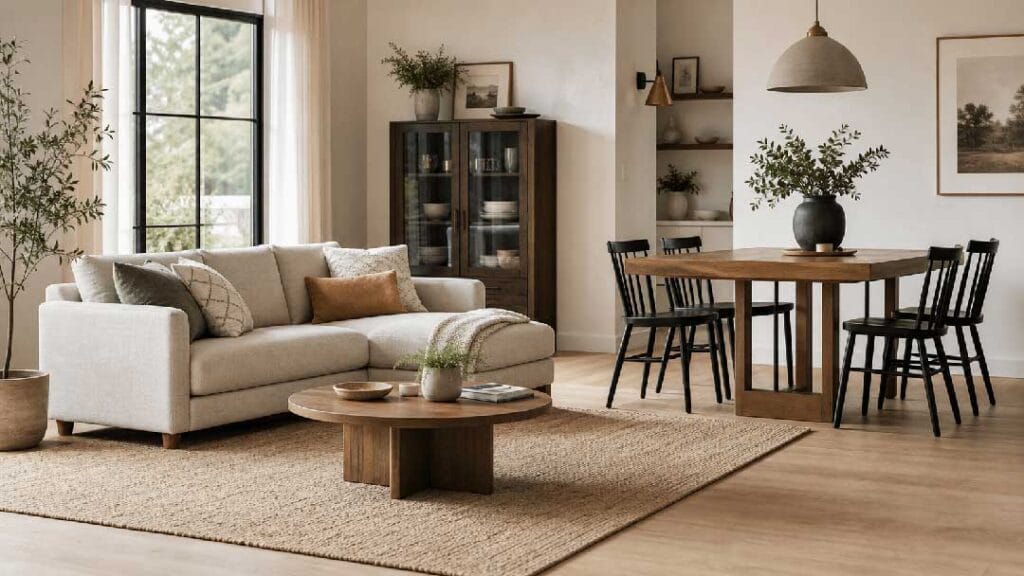
When choosing a dining table, sintered stone and marble are two options that many people struggle with. They look similar, but are fundamentally different. Sintered stone, a rising star in the last five years, is often compared to natural marble. Marble, as a classic material, still has many loyal users. This article won't simply say which is better or worse, but rather, starting from practical usage scenarios, it outlines the core differences between the two, including daily maintenance, stain and heat resistance, repair difficulty, price range, and which one should be chosen for different families.
I. The essential differences between sintered stone and marble
Sintered stone is a man-made material, mainly composed of feldspar, quartz, and clay, and is produced through high-temperature and high-pressure firing. Its production process determines its physical properties: high density, extremely low water absorption, high hardness, and resistance to acids and alkalis. Marble, on the other hand, is a natural stone, primarily composed of calcium carbonate, formed by tectonic activity. It possesses unique natural textures, but its structure is loose, containing micro-cracks, and it has high water absorption and relatively low hardness.
From a manufacturing perspective, sintered stone slabs can be made in thicknesses ranging from 3mm to 20mm, with common dining table thicknesses being 12mm or 15mm. Marble dining tables typically require thicknesses of 15mm or more, some reaching 20mm, but due to the brittleness of natural stone, thinner slabs are prone to breakage. Therefore, sintered stone dining tables can use thinner slabs, resulting in a lighter overall weight and less stringent requirements for the table frame; marble dining tables are usually heavier and require more stable legs.
1. Randomness of texture
Marble's texture is naturally formed, making each piece unique, but this also means it may have cracks, color variations, and impurities. Sintered stone, on the other hand, has artificially designed textures that can mimic marble, cement, and metal effects using molds or inkjet printing technology, but it offers high repetition and lacks the random beauty of natural stone. Users who appreciate uniqueness tend to prefer marble, but must also accept the risk of imperfections.
2. Touch and Temperature
Natural marble feels cold and hard to the touch. It's cool in summer, but sitting on it for a long time in winter can make your arms feel cold. Sintered stone, due to its high density, has a similar feel, but it doesn't feel as cold, especially in winter; sintered stone is slightly warmer than marble. If you have children or elderly people in your home, sintered stone might be a better choice.
II. Differences in maintenance during daily use
This is the issue that consumers care about most, and it's also where the difference between sintered stone and marble lies.
1. Stain resistance
Sintered stone has a water absorption rate of less than 0.02%, meaning it absorbs almost no water. Spills of soy sauce, red wine, or coffee will not leave marks if wiped away promptly. Even overnight, unless the liquid is highly corrosive, it is difficult for it to penetrate. Marble, on the other hand, is different. Natural stone has micropores, and once liquids penetrate, they will leave stains. Acidic substances such as red wine, vinegar, and lemon juice will corrode the surface, forming permanent etchings. Therefore, marble dining tables must use coasters, and spills should be wiped dry immediately. It is best to have a sealant treatment performed periodically.
2. Heat resistance
Sintered stone is heat-resistant, so you can place hot pots and pans directly on it, and even expose it to open flame without discoloration or cracking. Marble, on the other hand, is susceptible to heat damage; placing hot soup bowls on its surface can easily cause cracking or discoloration, especially with light-colored marble. Many marble dining table owners have experienced burn marks from pots and pans, which can still appear even with heat-resistant mats. Sintered stone completely surpasses marble in this respect.
3. Scratch resistant
Sintered stone has a Mohs hardness of 7, making it difficult for ordinary knives and metal cutlery to leave scratches. Marble, on the other hand, has a Mohs hardness of only 3-4, making it easily scratched by hard objects; care must be taken when cutting vegetables and moving dishes. Furthermore, the edges of sintered stone are relatively brittle; hitting a corner forcefully may cause chipping. Marble, on the other hand, is prone to cracking as a whole.
4. Daily cleaning
Sintered stone slabs can be wiped with a damp cloth; no special cleaning agents are needed, and you can even use a steel wool pad (but it's unnecessary). Marble must be cleaned with a neutral detergent; avoid acidic and alkaline cleaners, as they will corrode the surface. After cleaning, wipe it dry with a clean cloth to prevent water stains from seeping in.
III. Long-term costs of repair and maintenance
Furniture inevitably suffers damage over time, and the difficulty of repairing sintered stone and marble differs greatly.
1. Restoration of slab rock
Once deep scratches or chipped edges appear on sintered stone, they are almost impossible to repair. This is because sintered stone is fired as a single piece, without a coating, and cannot be sanded and refinished like solid wood. Minor dents can be filled with resin by a professional, but it's difficult to achieve a perfect color and grain match. A more realistic solution is to replace the tabletop. Fortunately, sintered stone dining tables aren't too expensive; a decent domestic sintered stone dining table can be found for 2000-5000 yuan, and replacing the tabletop would cost approximately 40%-60% of the entire table.
2. Marble Restoration
Scratches, stains, and loss of shine in marble can be repaired through grinding, polishing, and resealing. Professional stone restoration can restore it to 80-90% of its original condition; the cost depends on the area, generally ranging from several hundred to over a thousand yuan for a dining table. However, cracks are more difficult to repair, and the damage is more noticeable. It's important to note that marble requires regular sealing treatment, typically once a year, costing several hundred yuan each time. In the long run, the overall maintenance cost of marble is higher than that of sintered stone.
3. Stability Comparison
Marble naturally contains cracks, which may widen with prolonged use or temperature changes. Sintered stone slabs, due to their uniform structure, will not crack naturally unless subjected to a strong impact. However, the edges and corners of sintered stone slabs are more prone to chipping than marble during transportation and installation, requiring careful packaging.
IV. Price Range and Channel Observation
Currently, the price range for sintered stone dining tables on the market is quite wide. Domestic sintered stone dining tables (such as those from Delifeng and Xinmingzhu) are priced between 1500-4000 yuan for a 1.4-meter size; imported sintered stone (such as those from Spain's Desais and Italy's Lamina) are twice as expensive, potentially costing 6000-12000 yuan for the same size. The price of marble dining tables depends on the grade and origin of the stone. Domestic marble (such as Yunnan White Wood Grain and Guangxi Grey) ranges from 2000-5000 yuan, while imported marble (such as Carrara White and Spanish Beige) ranges from 6000-15000 yuan or even higher.
From a cost-performance perspective, domestically produced sintered stone dining tables are currently the most competitive. They mimic the texture of marble but have low maintenance costs, making them suitable for ordinary families. Imported sintered stone is of higher quality and has a more realistic texture, but its price is close to that of mid-range marble. If you have a limited budget but still want the feel of stone, domestically produced sintered stone is the better choice. If you are looking for a unique natural texture and don't mind maintenance, marble is also an option, but be prepared for the possibility of it being too expensive.
V. How to choose for different family scenarios
Based on the target consumer group and the spatial scenario, here are some specific suggestions.
- Families with children:Sintered stone is the top choice. It is stain-resistant, scratch-resistant, and heat-resistant. It is easy to clean when children draw on it or eat it, and you don't have to worry about juice seepage or hot bowl marks.
- We often eat hot pot and barbecue at home:Sintered stone slabs can be placed directly on induction cookers and pots without fear of heat. Marble, on the other hand, requires a heat-resistant mat, and is prone to staining from hot pot broth splashes.
- Those who seek a natural feel and are willing to spend time on skincare:Marble. However, it requires weekly cleaning and monthly sealing; it has a long lifespan but high maintenance costs.
- Small apartment, compact space:Slab dining tables can be chosen in thinner designs, appearing lighter and more durable. Marble dining tables are heavier, making them inconvenient to move.
- Rental or temporary use:Domestic slab dining tables are inexpensive, so you won't feel bad if they break; however, if marble is damaged, the repair cost may exceed the value of the table itself.
- Distributor Product Selection:Sintered stone dining tables sell quickly and have fewer after-sales issues, making them especially suitable for online sales. Marble dining tables are more suitable for high-end brick-and-mortar stores, where customers need to be informed about maintenance details.
VI. Regarding dining table dimensions and practical suggestions
Whether you choose sintered stone or marble, the size of your dining table must be determined by the size of your dining room. Common mistakes: a table that's too large makes the flow of movement cramped, while a table that's too small makes it feel confined. General recommendations: a 1.4-meter long table is suitable for 4 people, 1.6 meters for 6 people, and 1.8 meters for 8 people. The recommended width is 80-90 centimeters. For round tables, a 1.2-meter diameter is suitable for 4 people, and a 1.5-meter diameter is suitable for 6-8 people. Additionally, leave at least 60-80 centimeters of aisle space between the table and chairs.
The leg structure is also important. Sintered stone and marble are relatively heavy, while metal legs (carbon steel, stainless steel) offer good load-bearing capacity and a modern look, but attention should be paid to stability and rust prevention. Solid wood table legs have a warmer feel, but they may warp under the weight of the stone over time; it is recommended to choose thicker legs or a cross-shaped structure.
VII. Market Trends and Consumption Changes
From an industry perspective, sintered stone furniture experienced explosive growth after 2019 and has now become the mainstream material for dining tables, coffee tables, and TV cabinets. Many manufacturers that originally made stone furniture have added sintered stone to their product lines. While marble dining tables are classic, their market share is shrinking, especially in first-tier cities, where younger people prefer the low-maintenance characteristics of sintered stone. However, in the high-end market, marble remains a status symbol.
Another trend is the combination of sintered stone with solid wood and metal: sintered stone tabletops paired with solid wood legs offer both a modern feel and a natural touch. Marble is more often used in minimalist or understated luxury styles, paired with metal legs or bases. In terms of price, the ex-factory price of sintered stone dining tables has been decreasing year by year, but imported sintered stone remains at a high level.
When purchasing, consumers are advised to ignore sales pitches and focus on the following: the thickness of the tabletop material (no less than 12mm for sintered stone and no less than 15mm for marble), whether the bottom has reinforcing ribs or a backing plate (to prevent breakage), and the material and connection process of the table legs (whether the welds are smooth and the screws are secure). Try sitting on the table and shaking the legs to feel its stability.
There's no definitive answer to the debate about sintered stone versus marble within the industry. However, it's undeniable that sintered stone is better suited to modern lifestyles, while marble is better for those willing to invest in aesthetics. Similarly, there are no right or wrong answers when it comes to furniture selection; it's all about suitability.
Finally, I'd like to mention that the nkfurn platform has long focused on furniture materials and craftsmanship, spatial design, and market trends. Whether it's the firing technology of sintered stone or marble maintenance solutions, it will continue to provide objective and practical information to help consumers and industry professionals better understand furniture selection and industry changes.
Further Reading
If you are systematically planning your furniture selection or market content, you can also continue reading these related articles:
- Why did Ming Dynasty furniture favor yellow, while Qing Dynasty furniture preferred black? The aesthetic shift from huanghuali to zitan.
- How to Find Reliable Furniture Suppliers in China
- Waterborne Coatings: Shaping a New Path for Green Manufacturing in Nankang Furniture
- How long will the popularity of slab stone dining tables last? Advantages and disadvantages, real-world usage scenarios, and a guide to avoiding common pitfalls when purchasing.
- Common Solid Wood Furniture Materials Compared: Oak, Walnut, or Beech — How Should You Choose?